
Choir Information
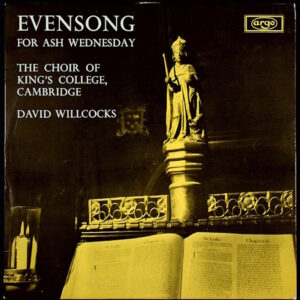
Founded in the fifteenth century, The Choir of King’s College, Cambridge is undoubtedly one of the world’s best known choral groups, responsible for what is perhaps the most famous recording of Allegri’s “Miserere” made in 1963.
Sir David Valentine Willcocks, CBE, MC (30 December 1919 – 17 September 2015) was a British choral conductor, organist, composer and music administrator. He was particularly well known for his association with the Choir of King’s College, Cambridge, which he directed from 1957 to 1974, making frequent broadcasts and recordings. (Wikipedia)
Performance Information
Whilst the Miserere is exceptional, it is even better for the experience of listening to it as the conclusion of this wonderful Evensong service. There is also so much to enjoy in the music of this recording that it’s easy to overlook one of its spoken-word gems: the reading of the Second Lesson, by David Willcocks himself.
Recording Information
Recording Engineer: Kenneth Wilkinson
Release Information
Producer: Andrew Raeburn / Mastering: Ted Burkett
Pressing Details
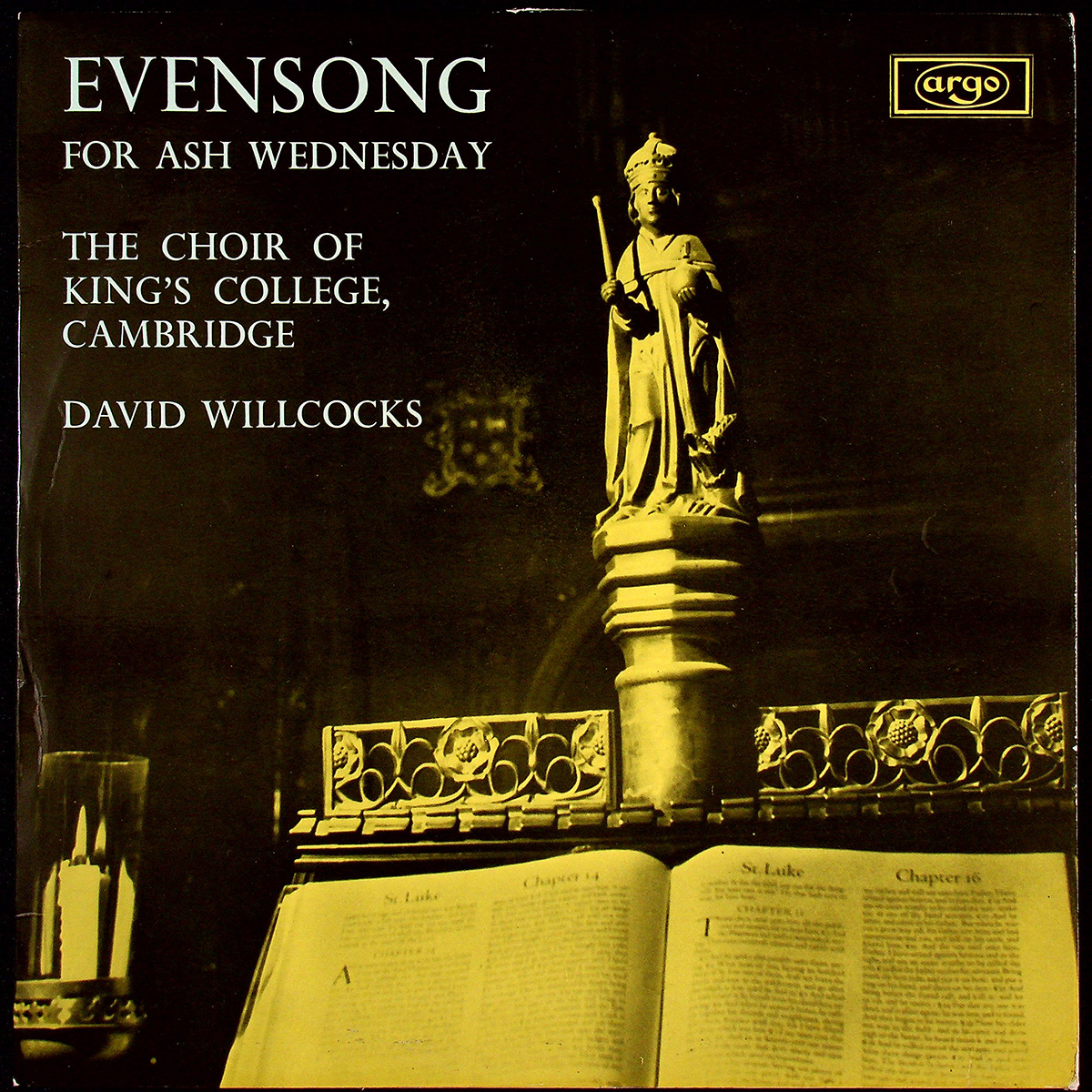
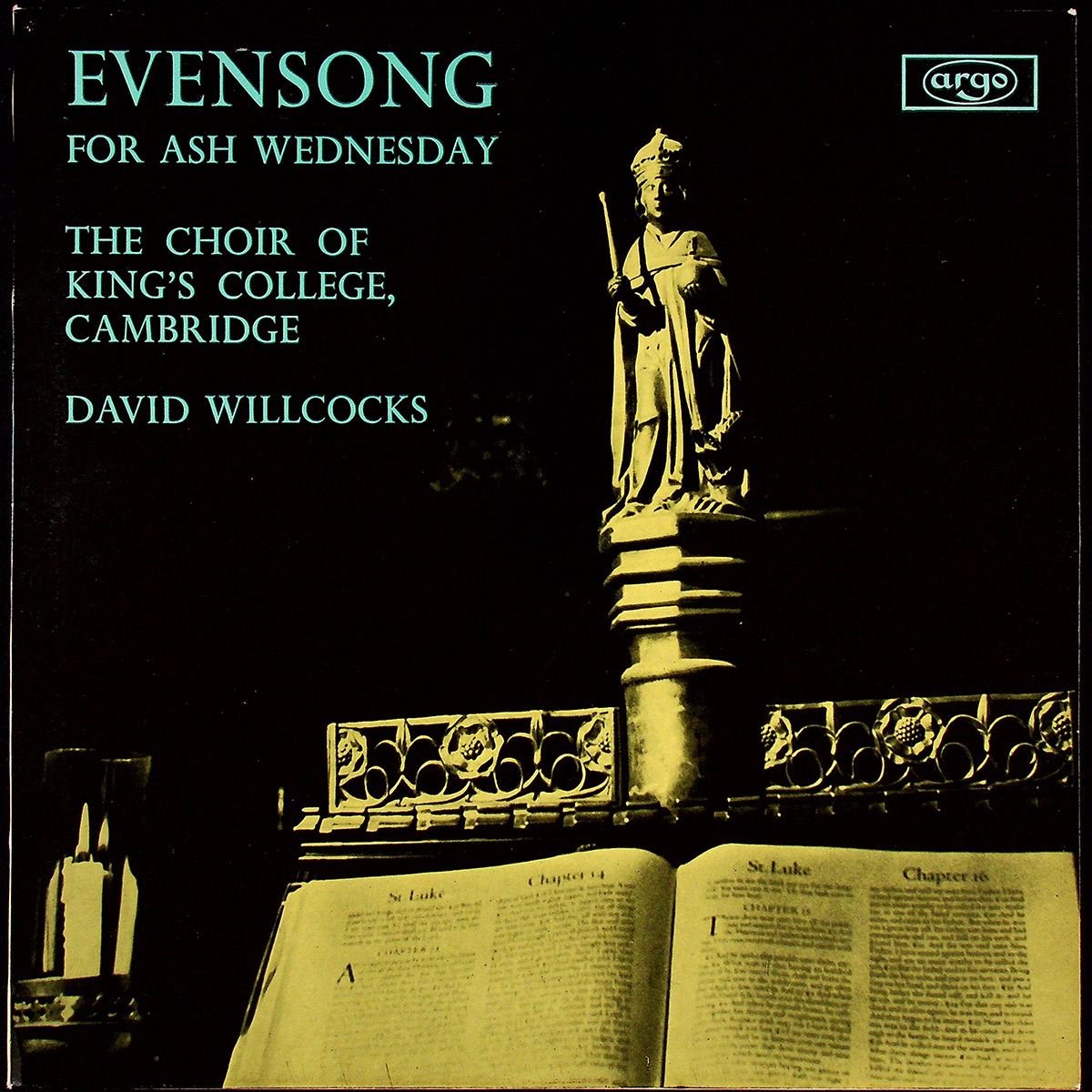
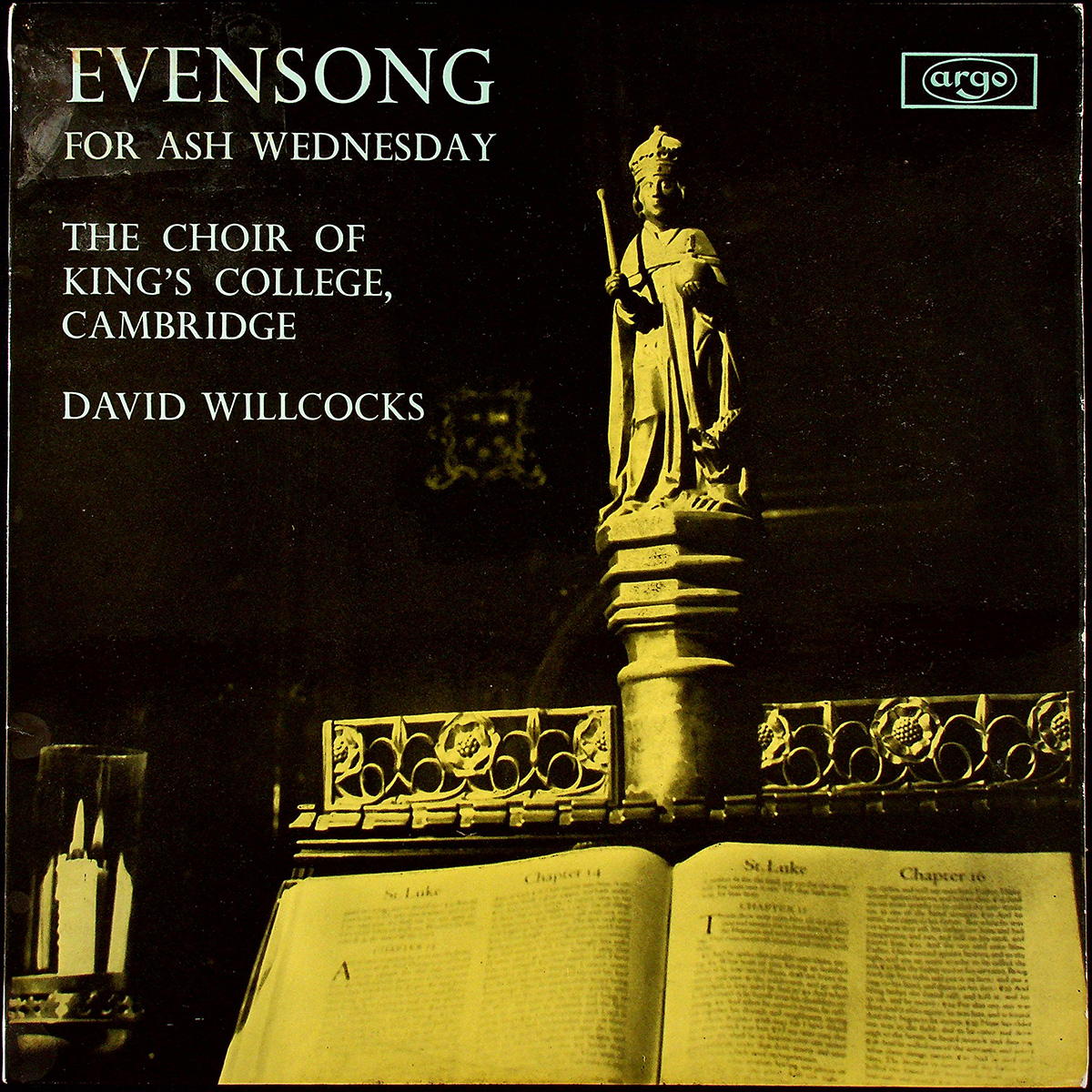
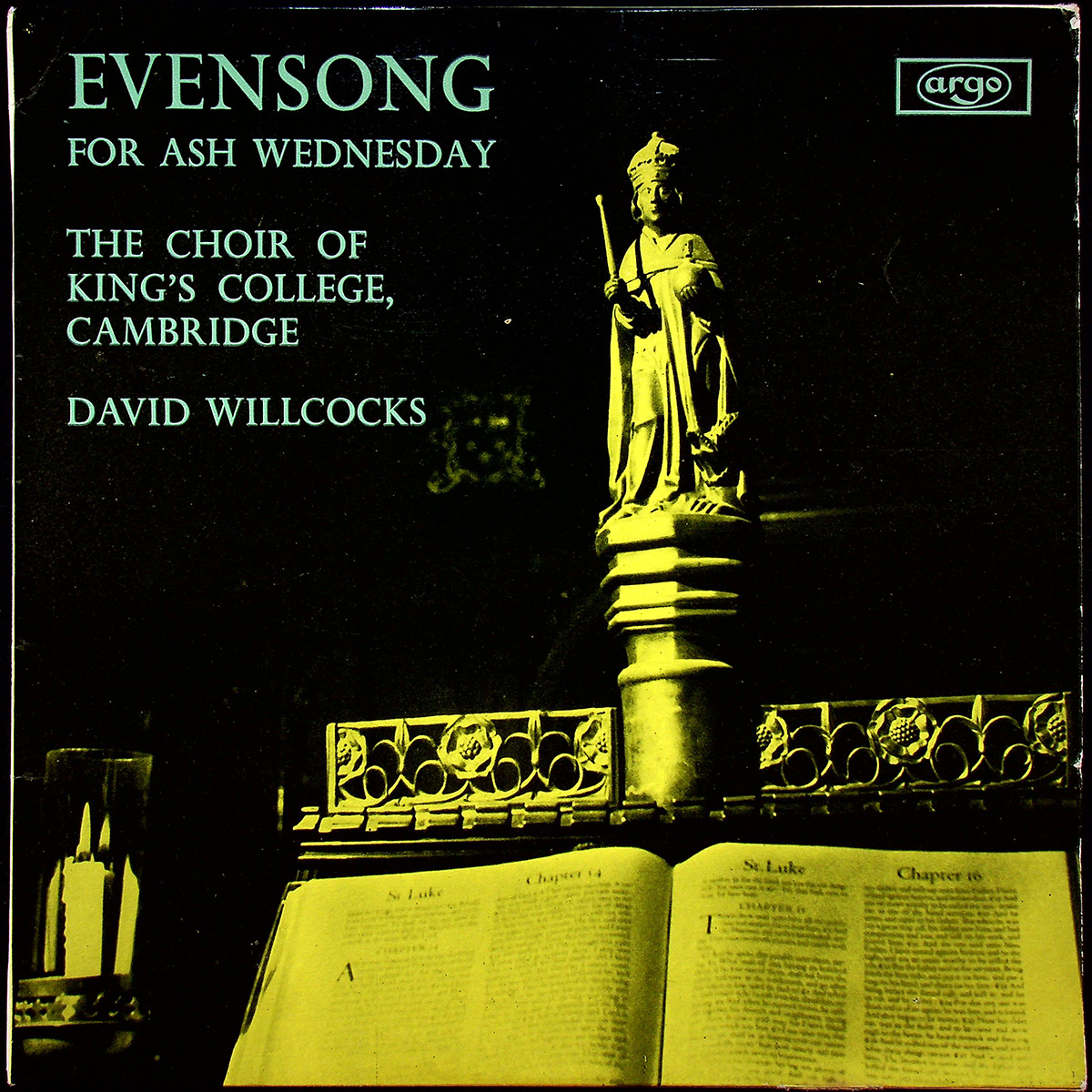
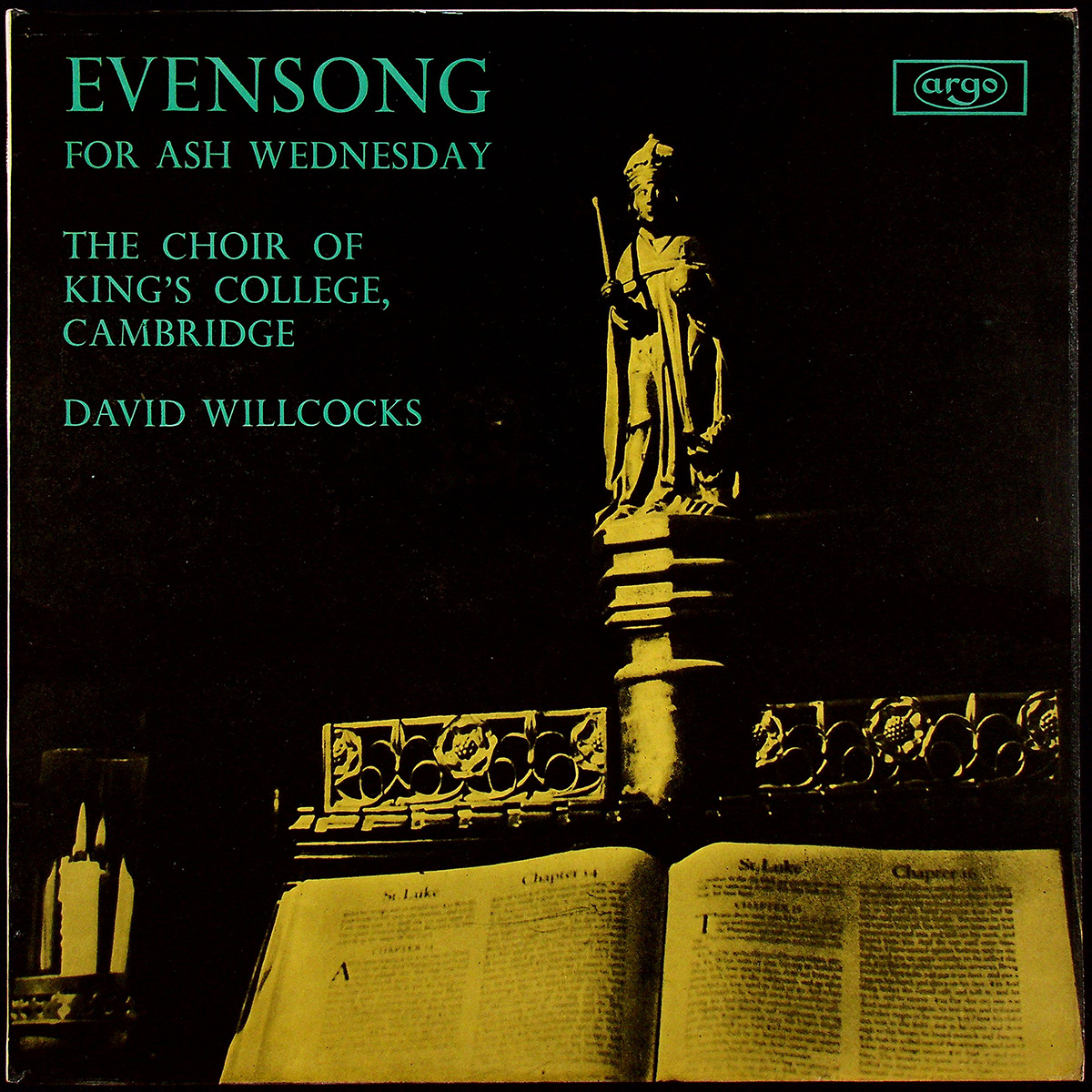
We believe this is an accurate representation of the main examples of this album. As well as the differences described below, there is considerable variation in the shade of the blue/green colour on the front album cover between each variant, and between multiple copies of the same variant. The yellow/black is much more consistent across all the covers in the archive.
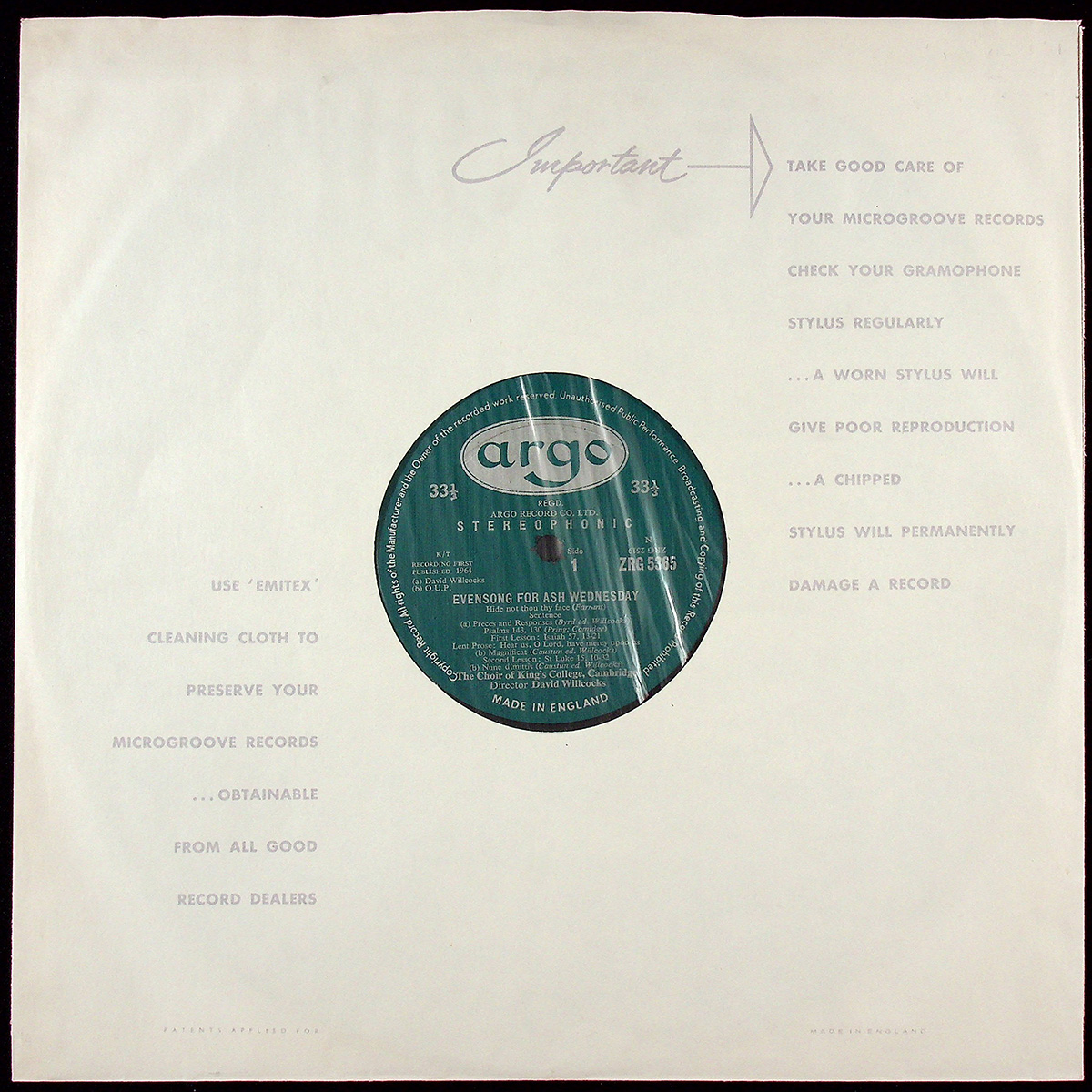
“Argo” Oval Label – Made in England
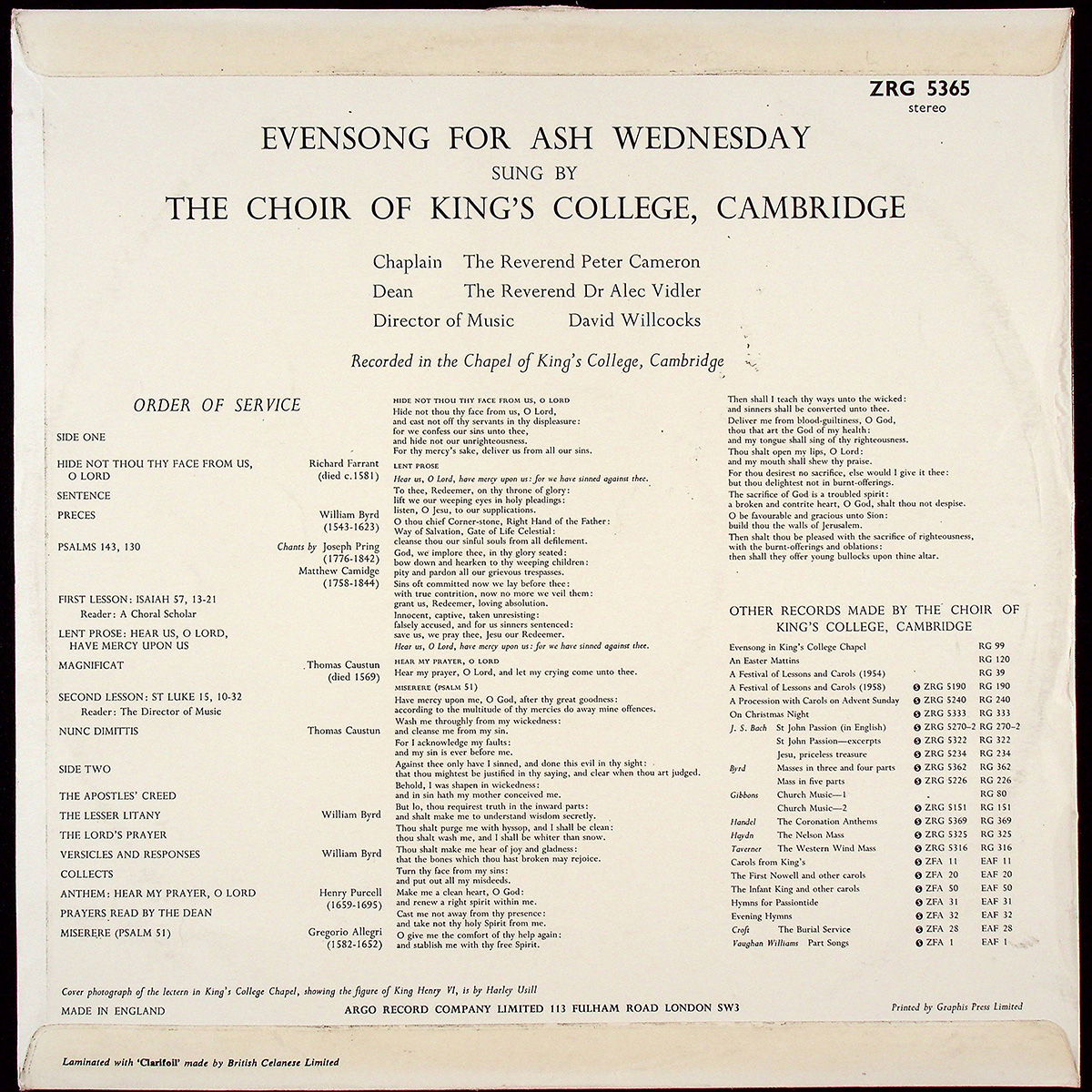
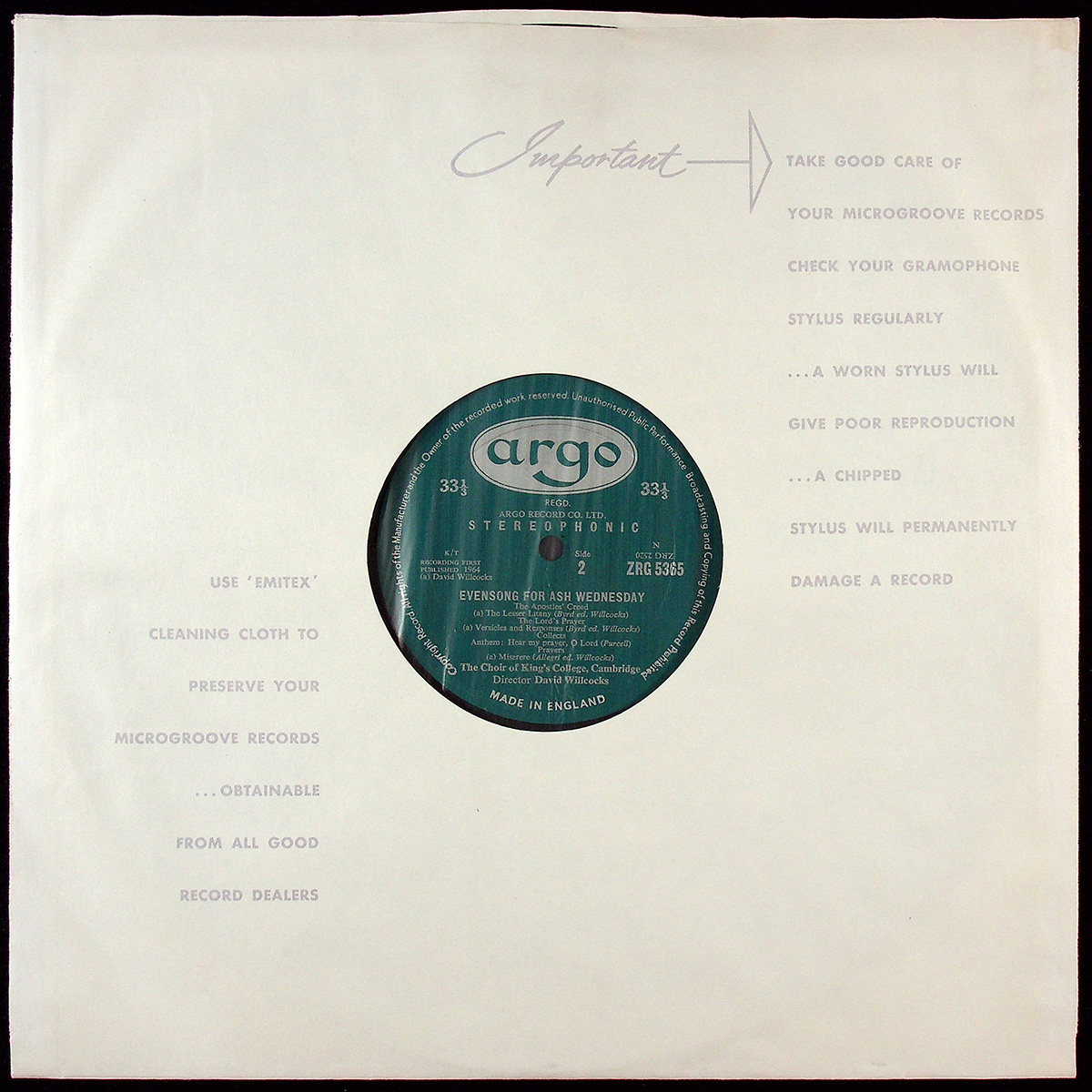
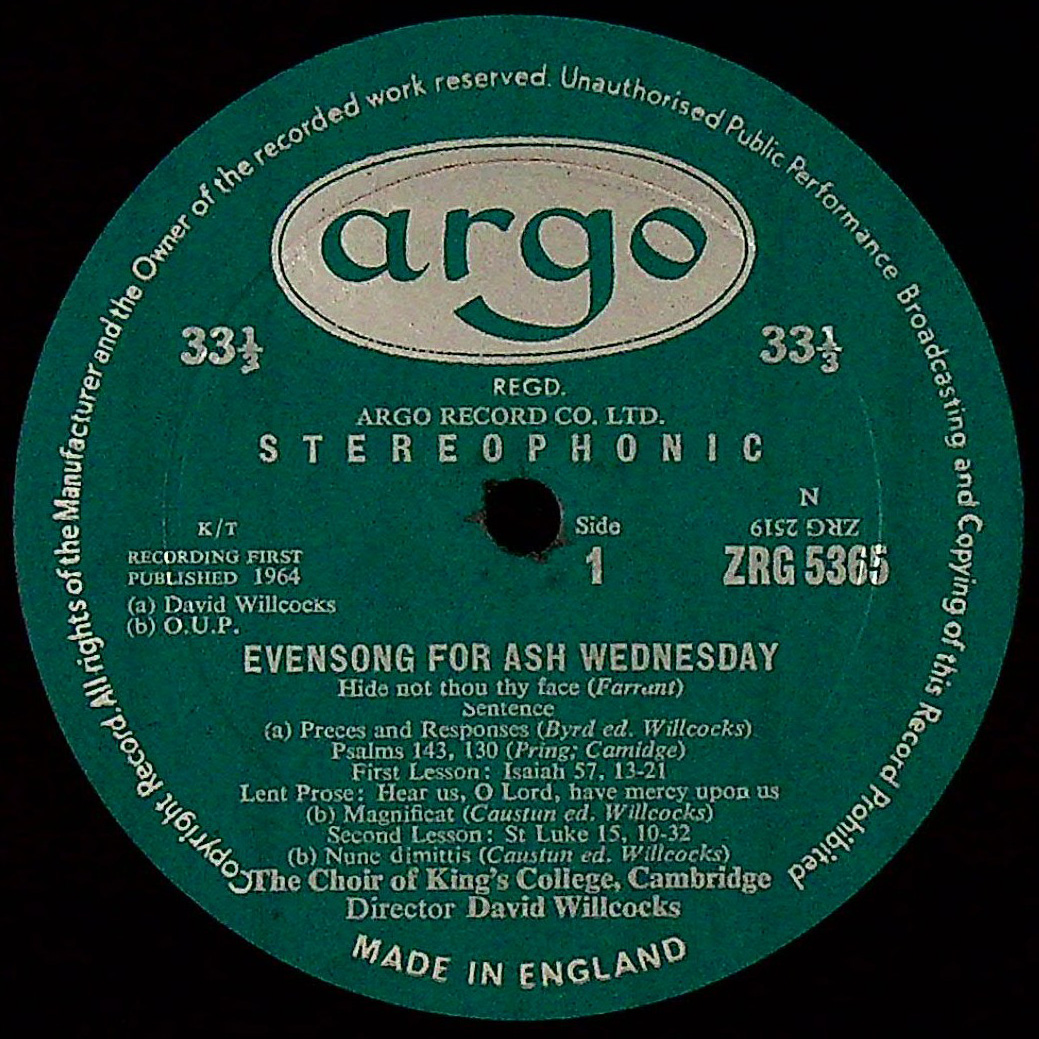
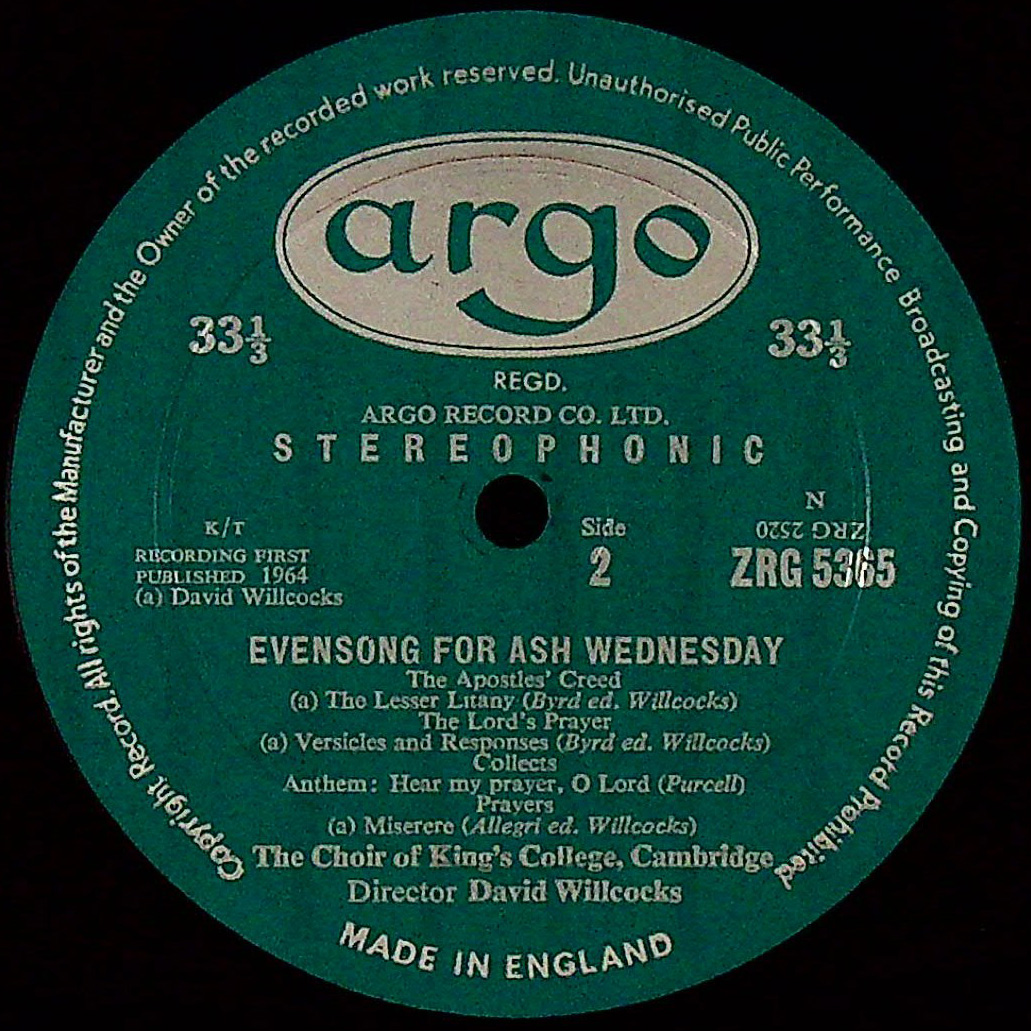
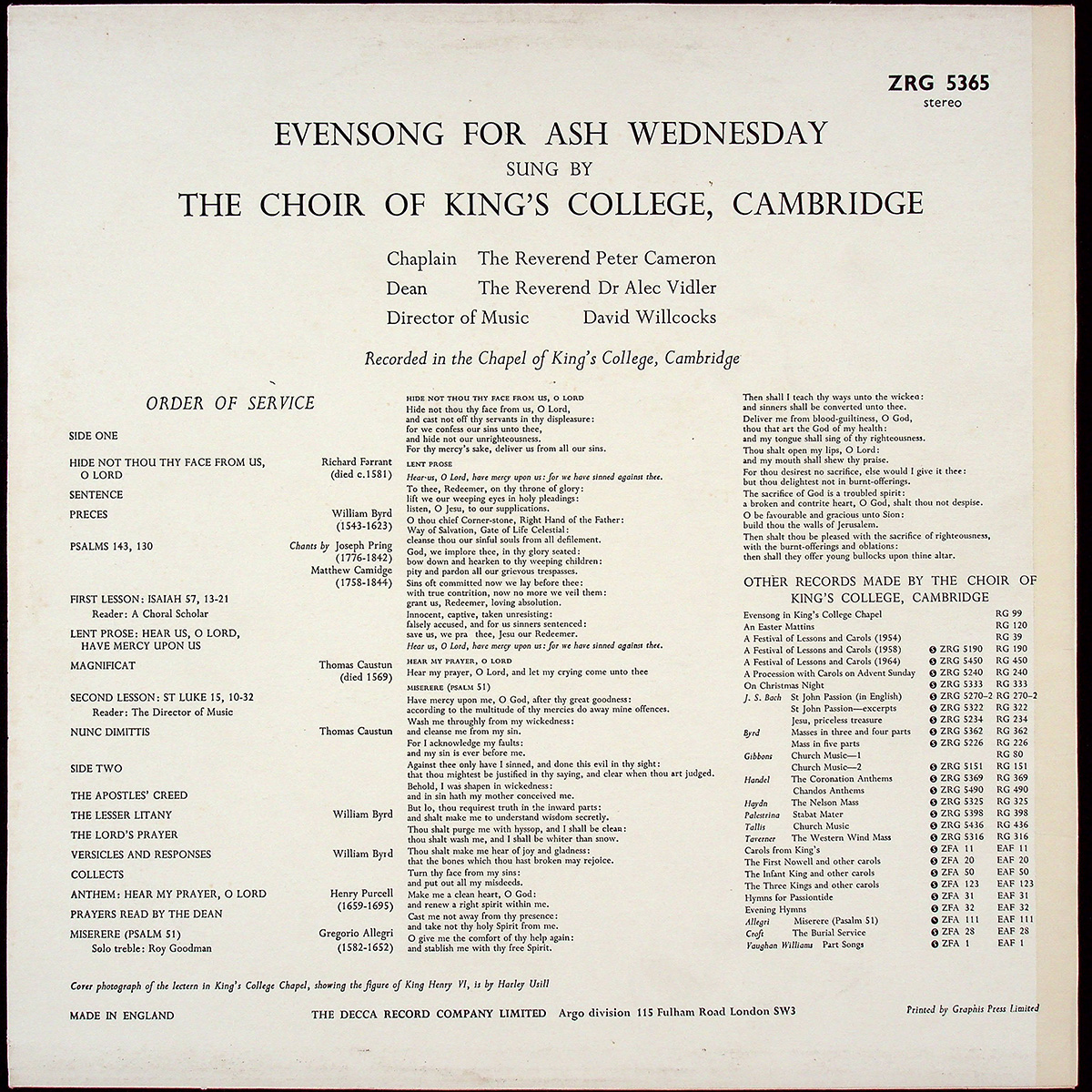
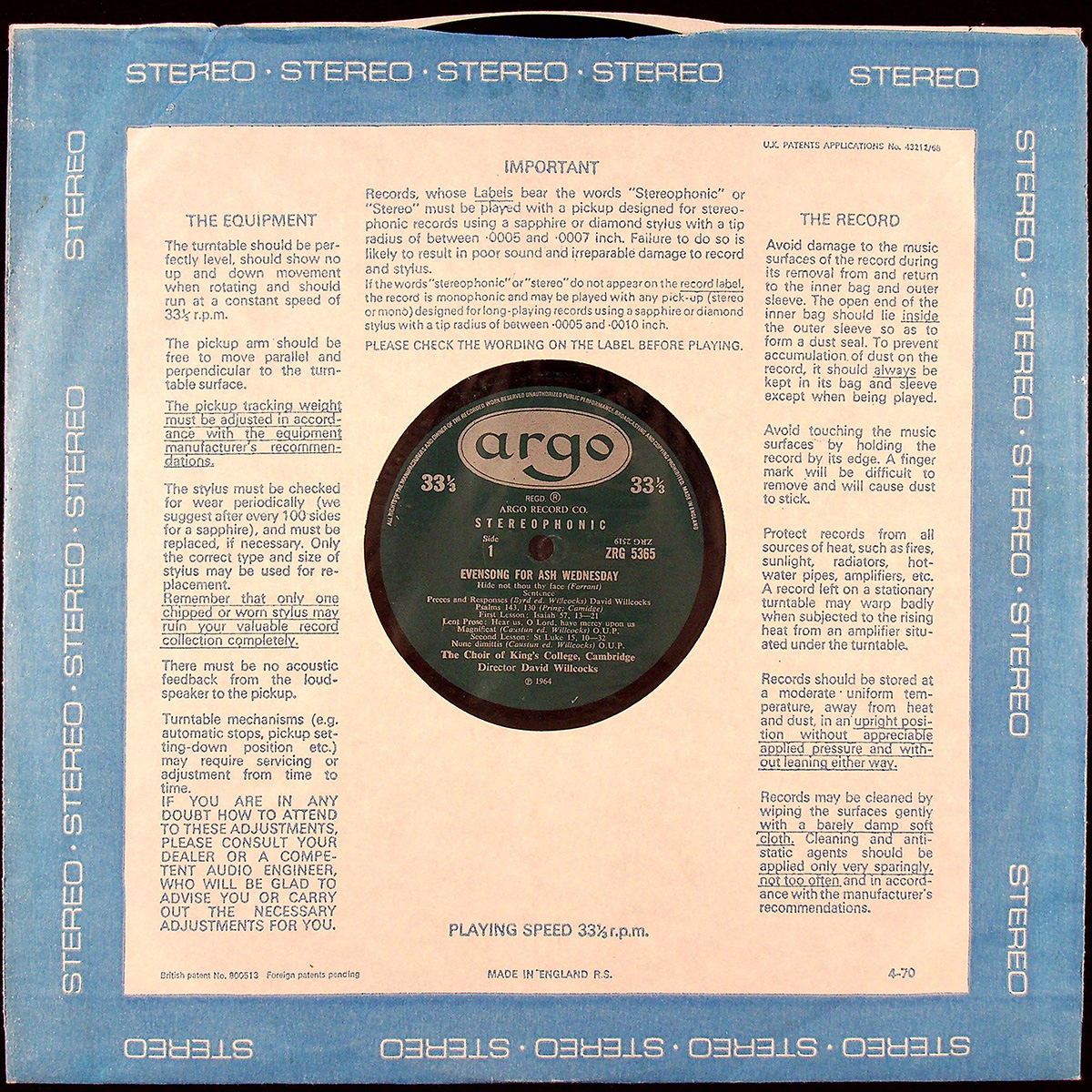
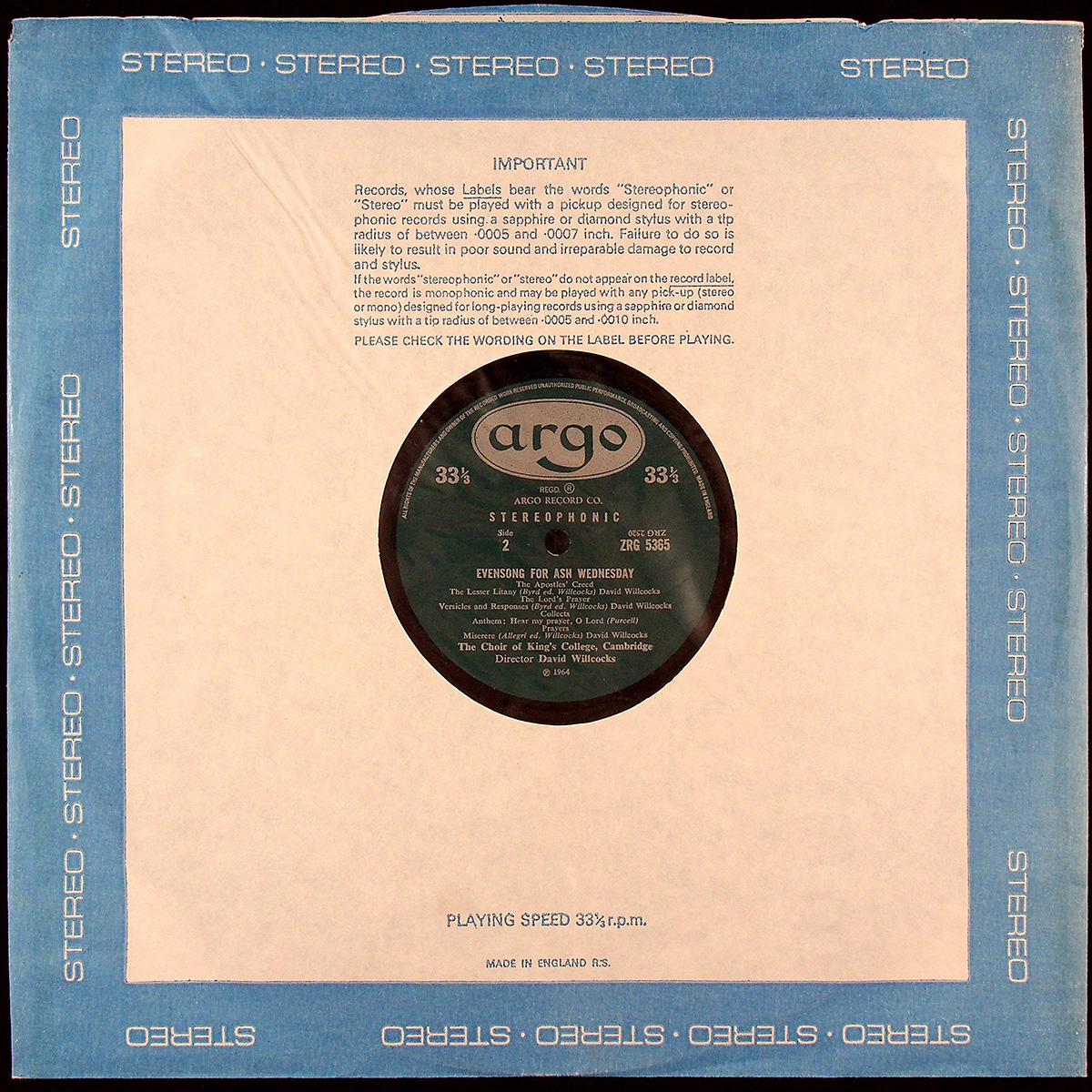
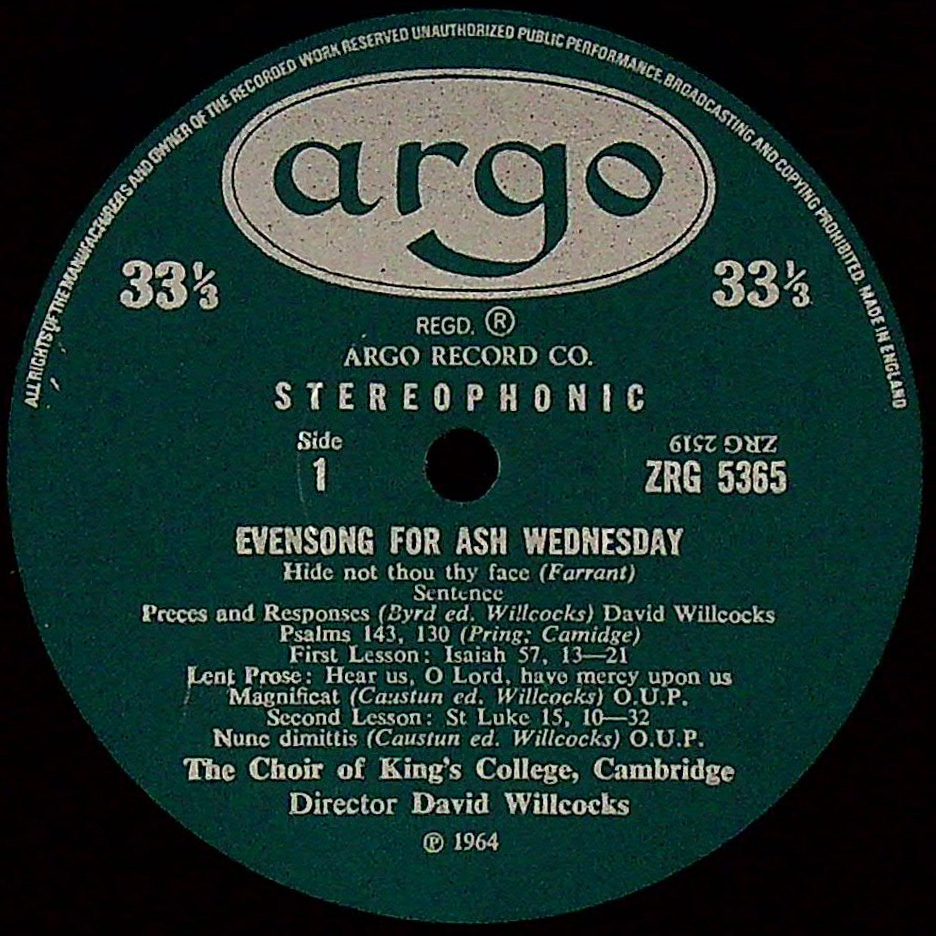
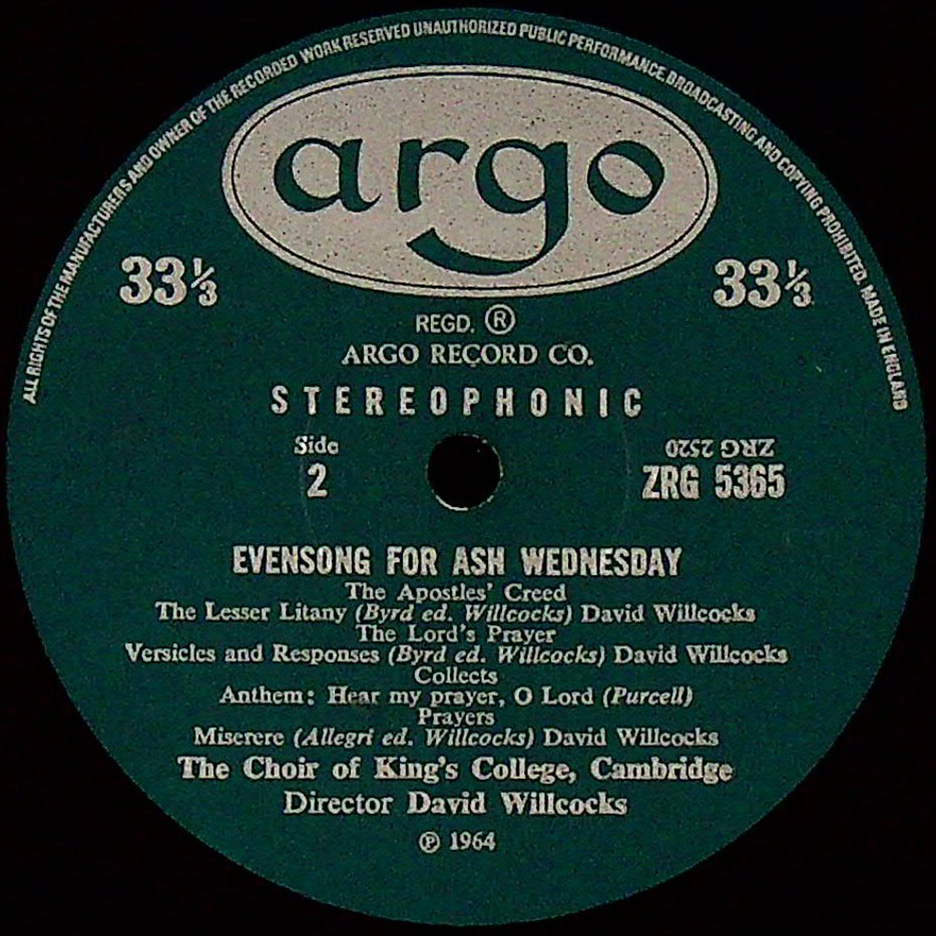
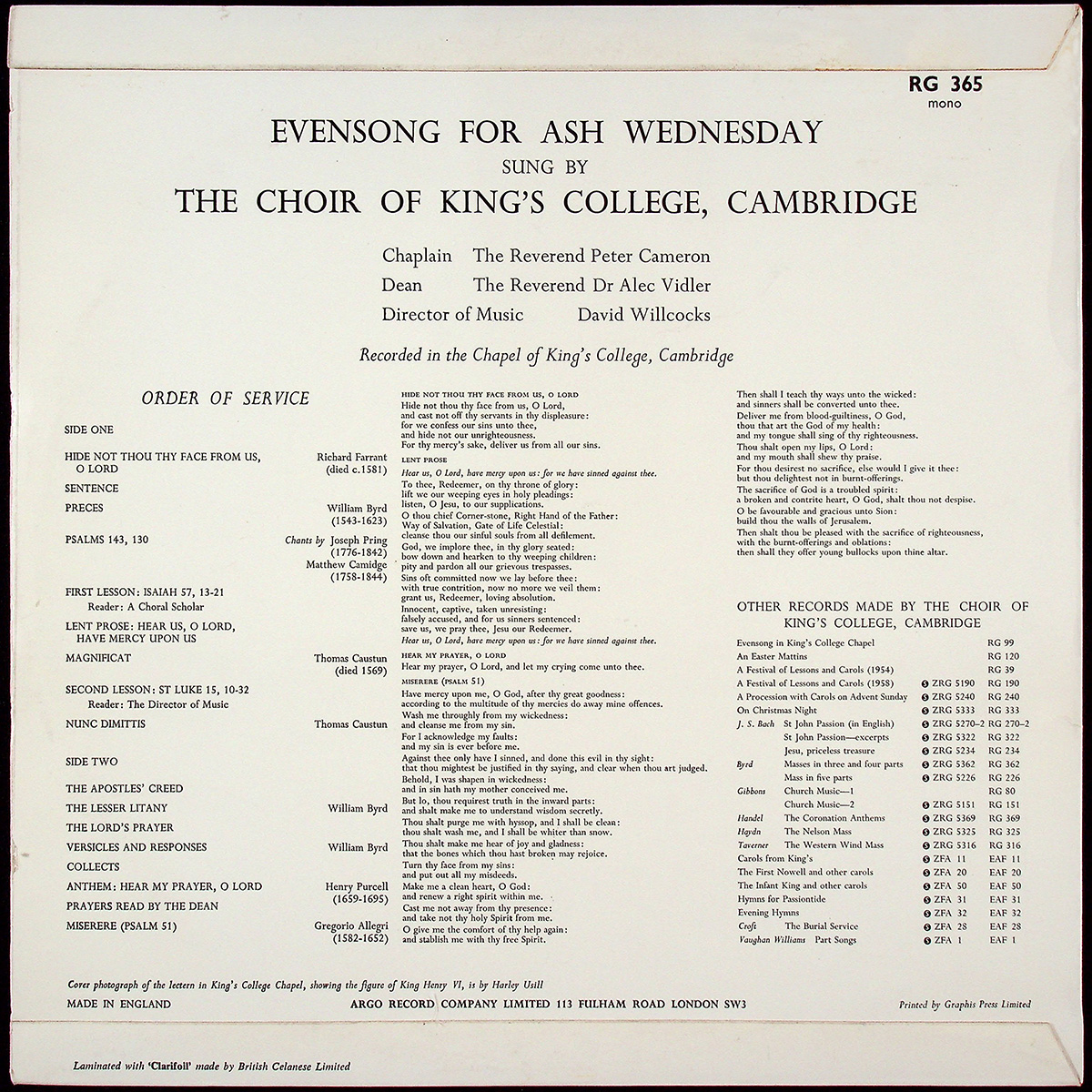
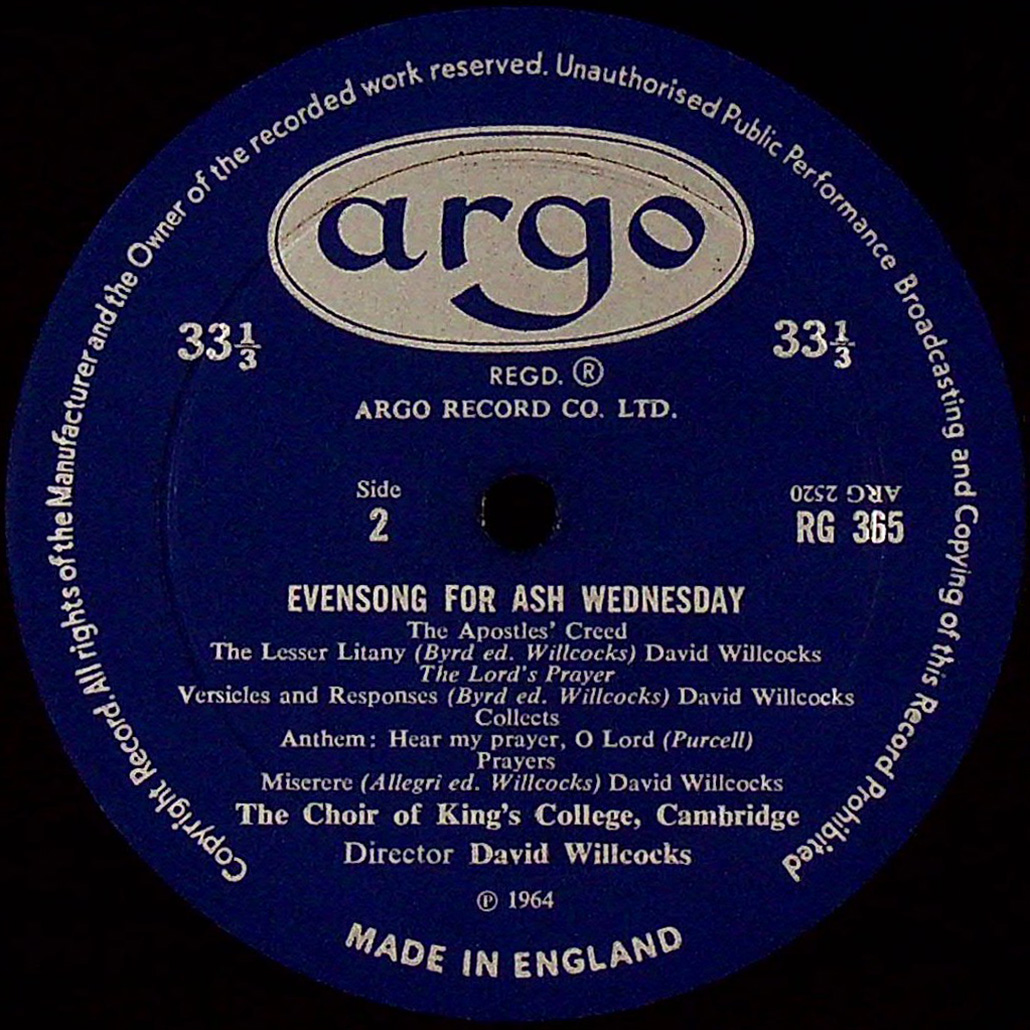
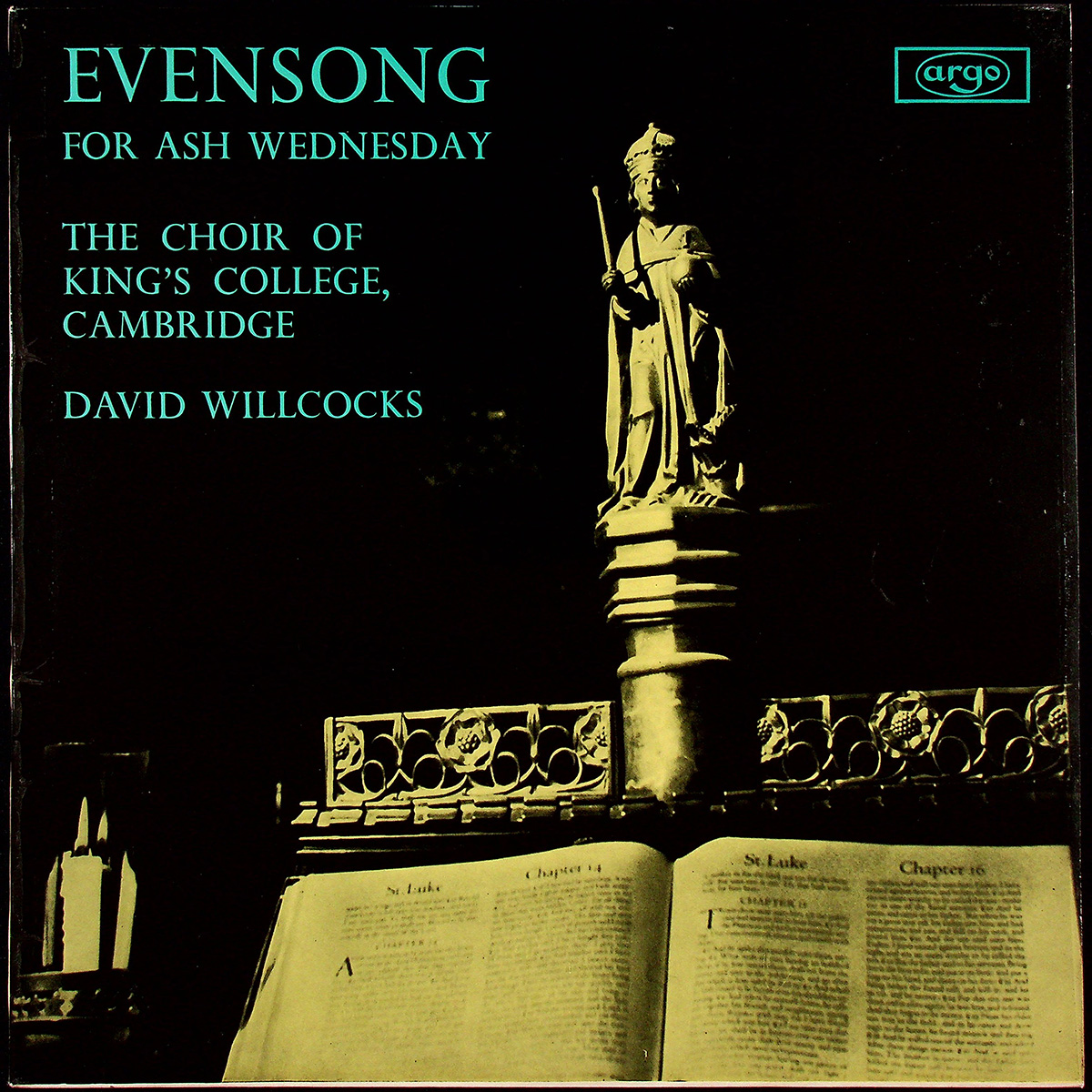
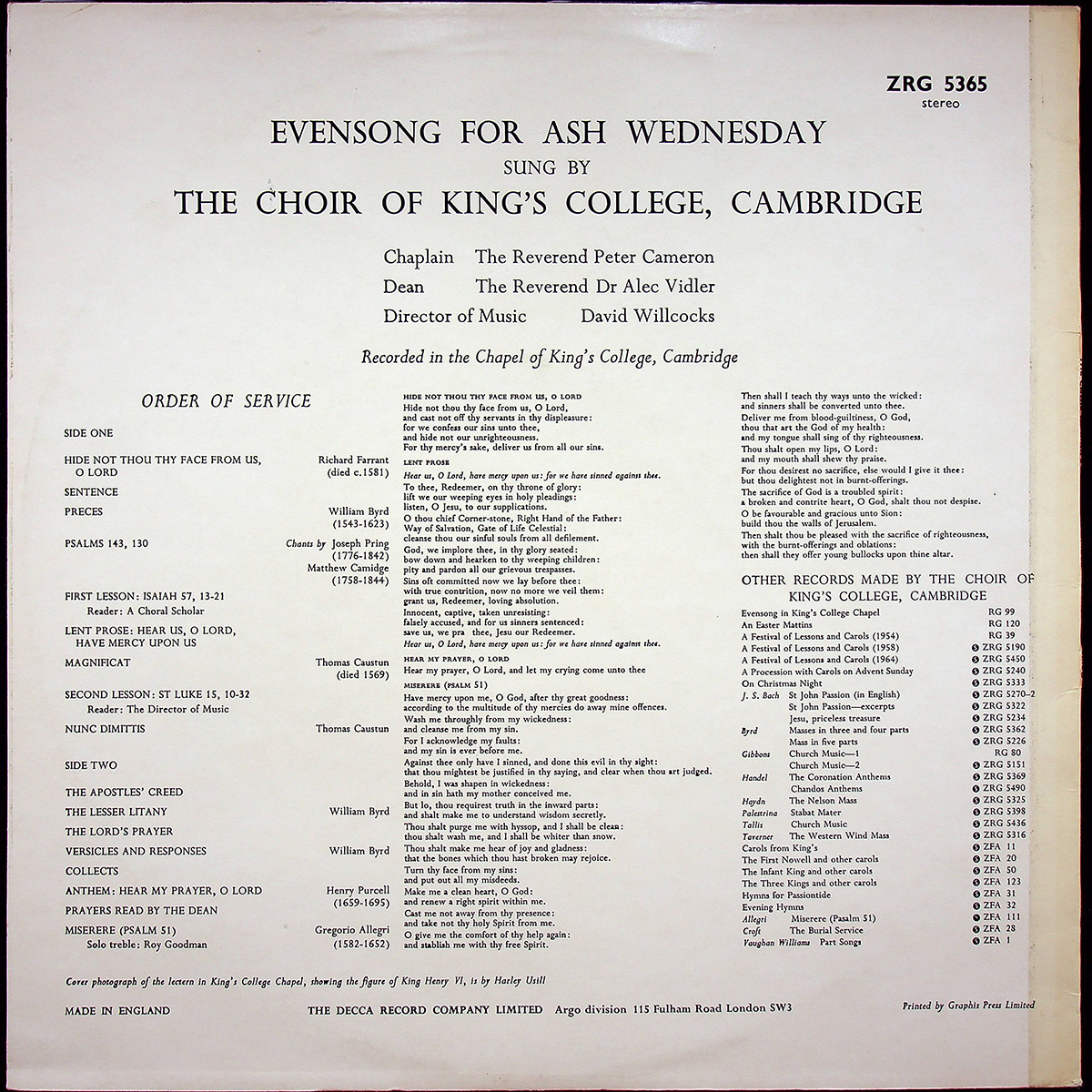
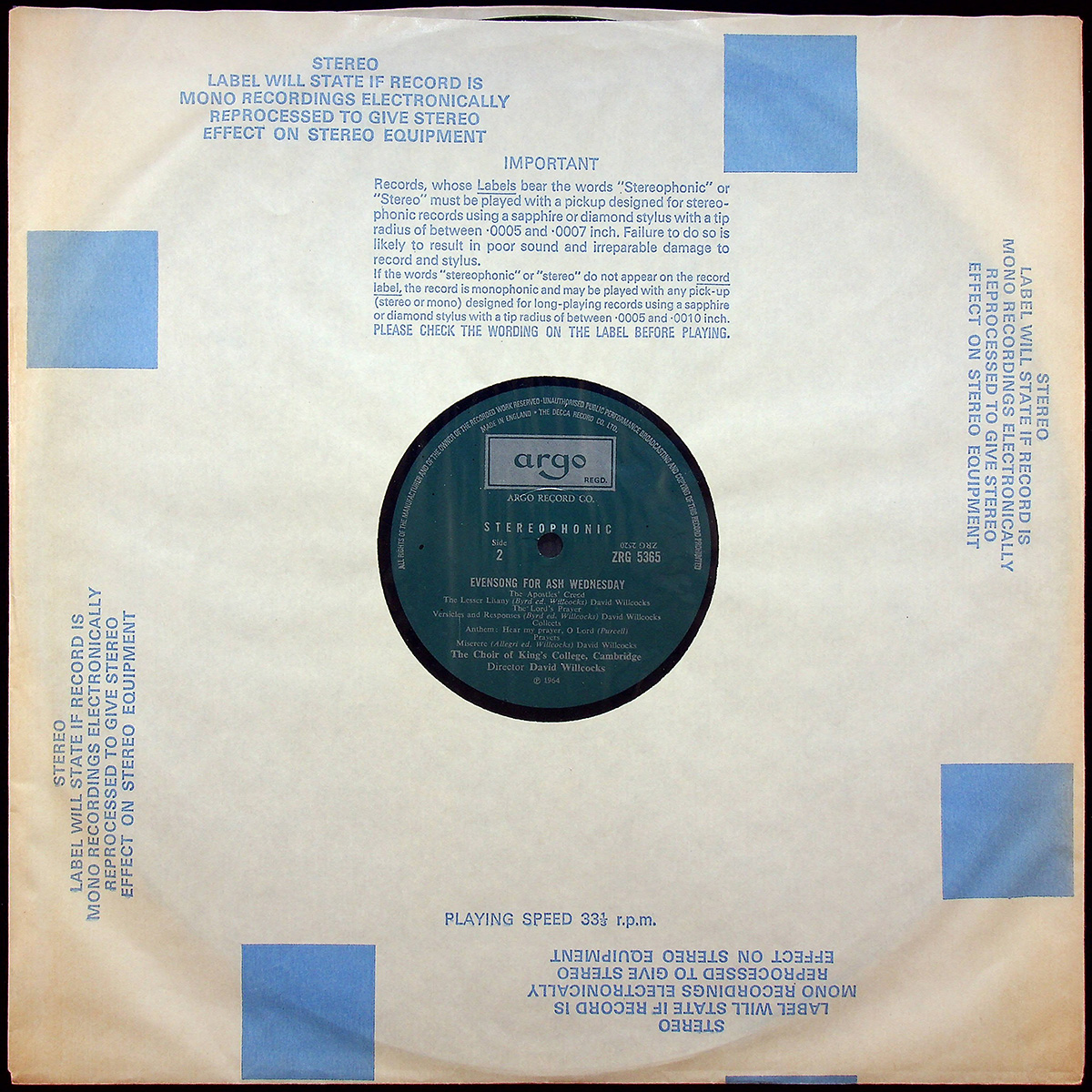
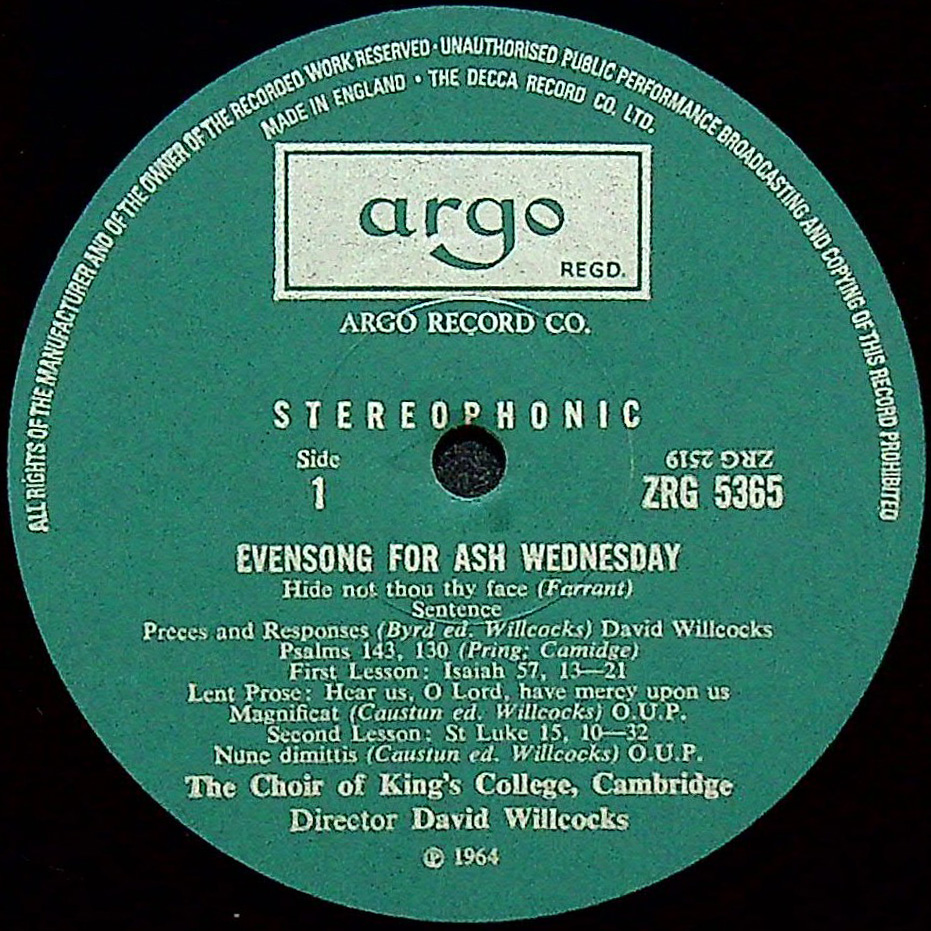
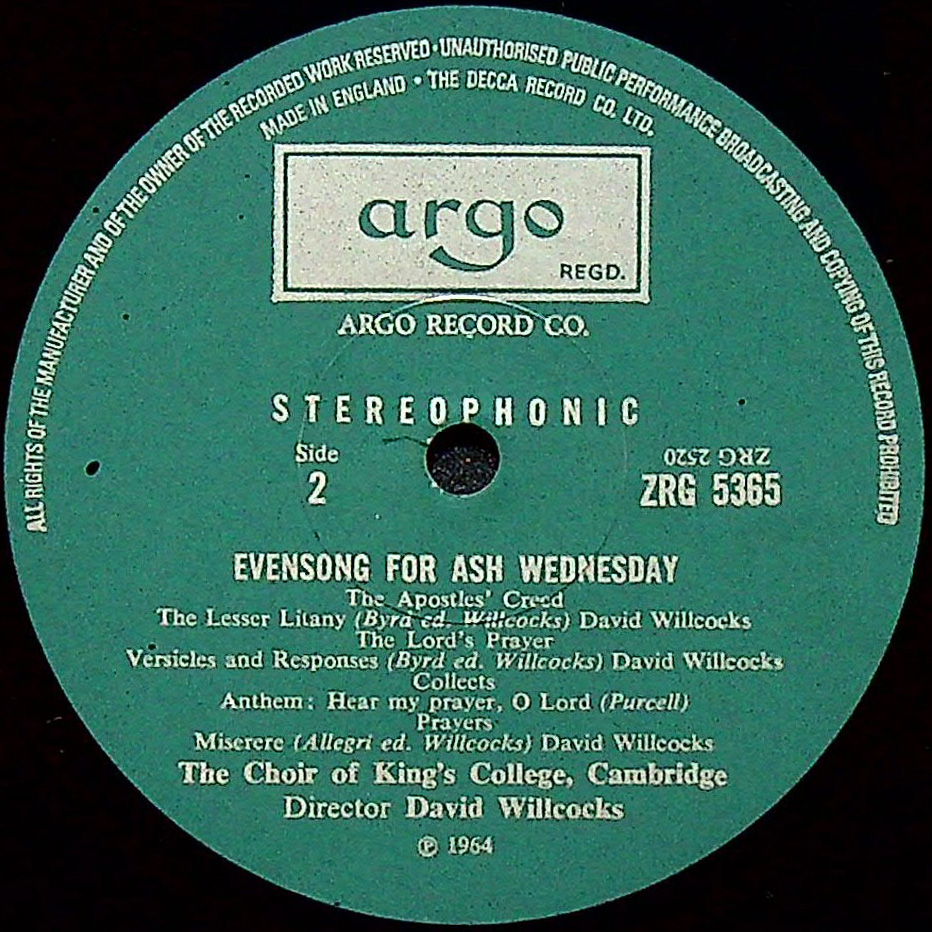
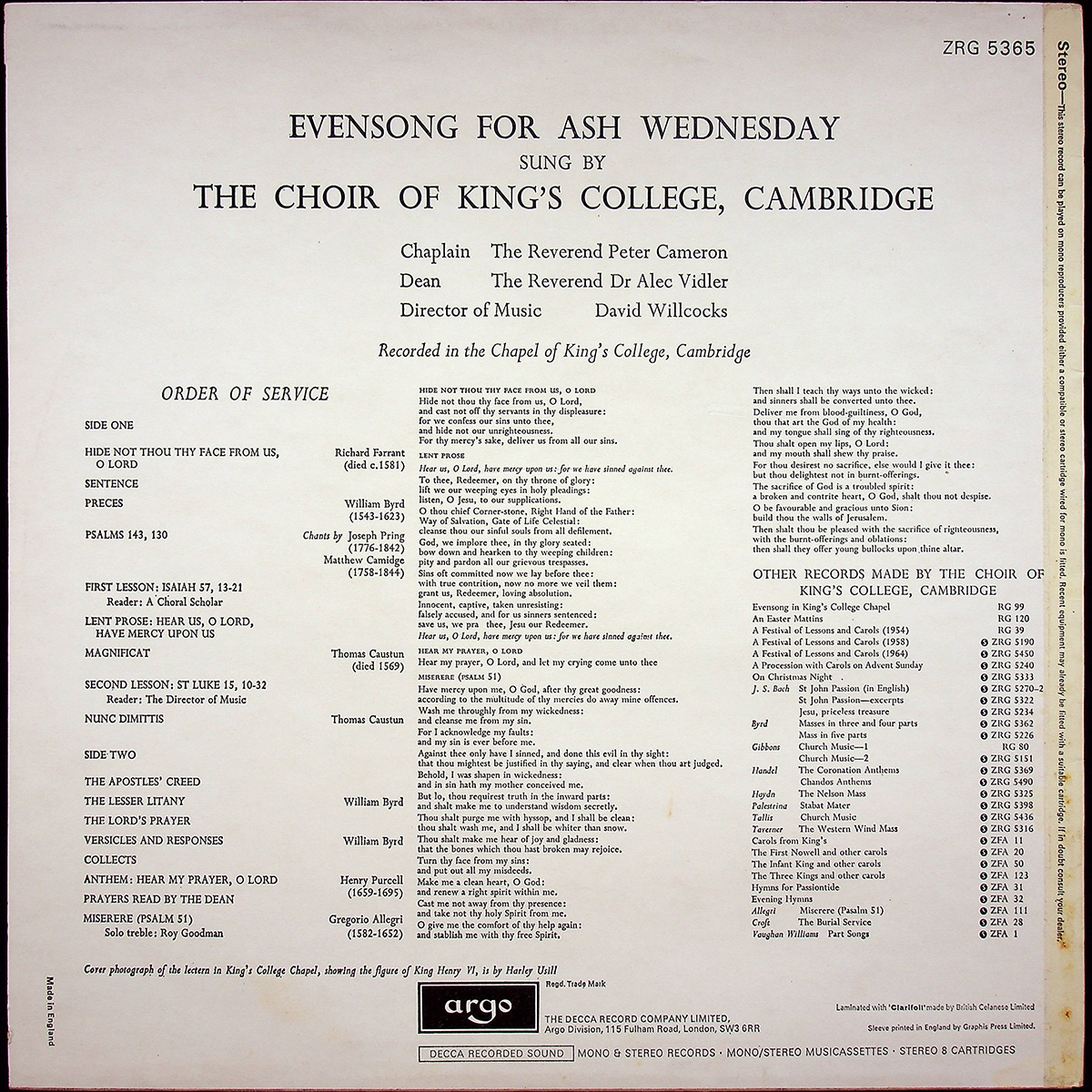
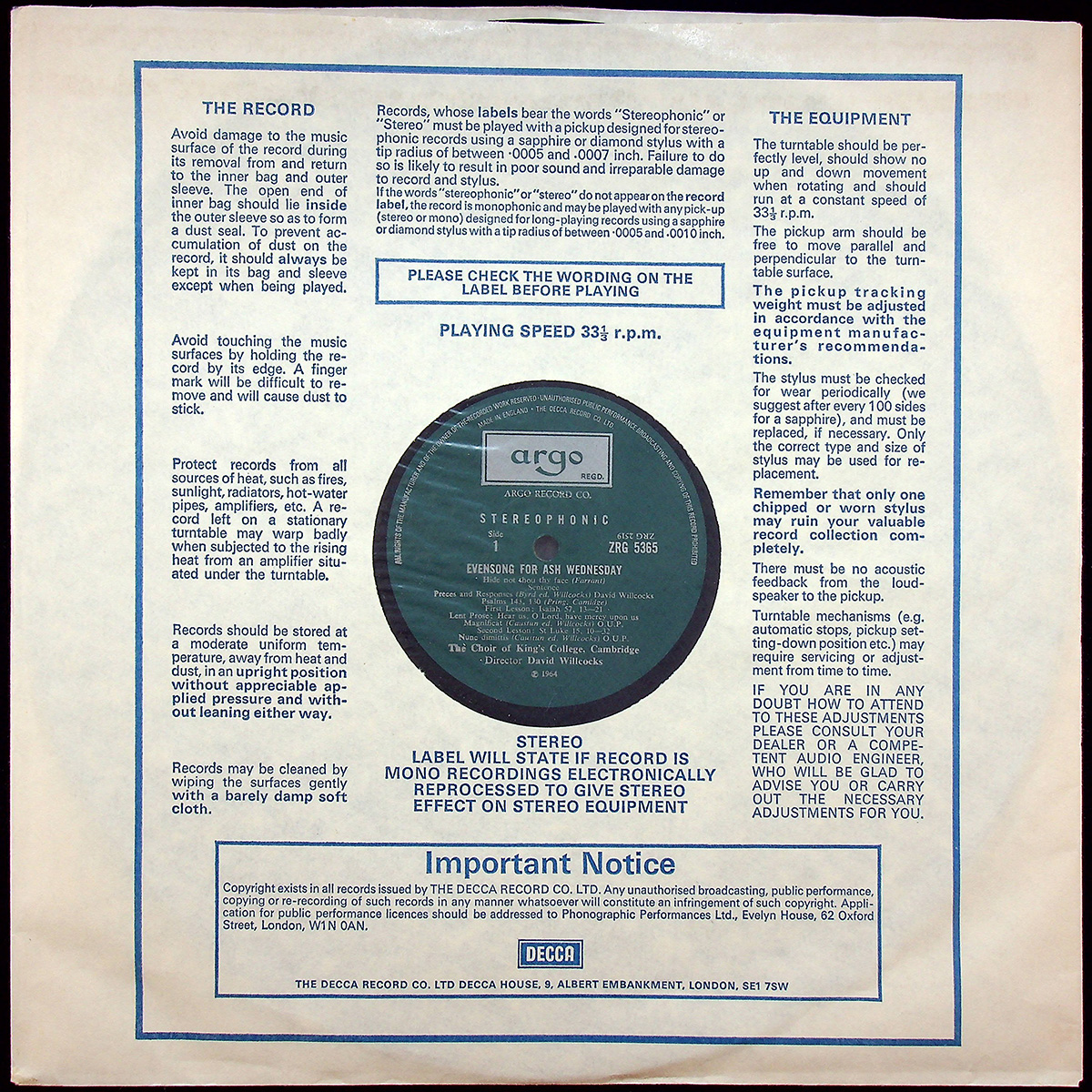
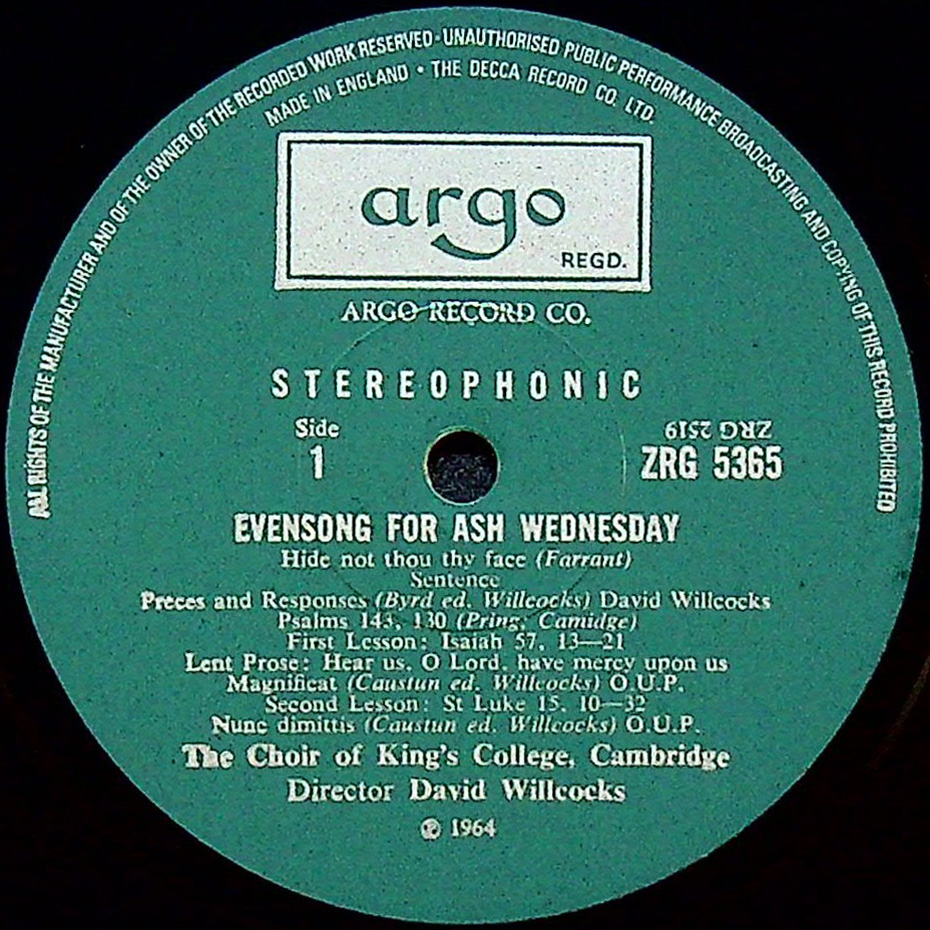
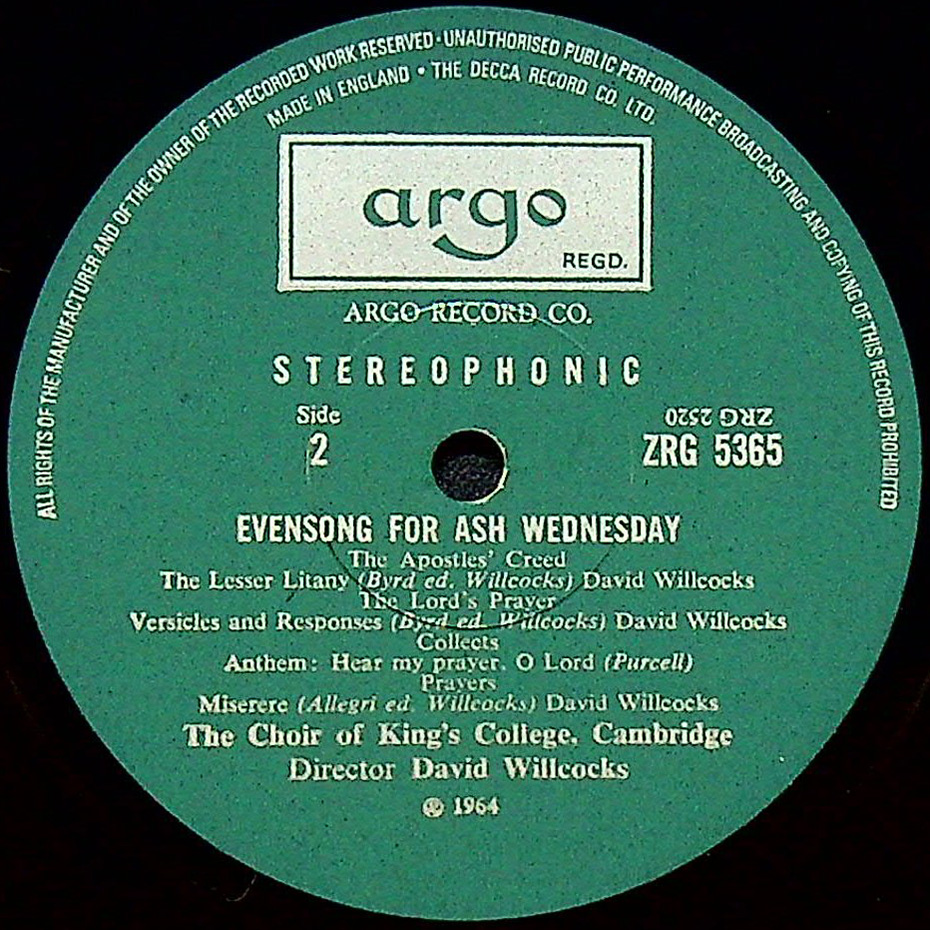
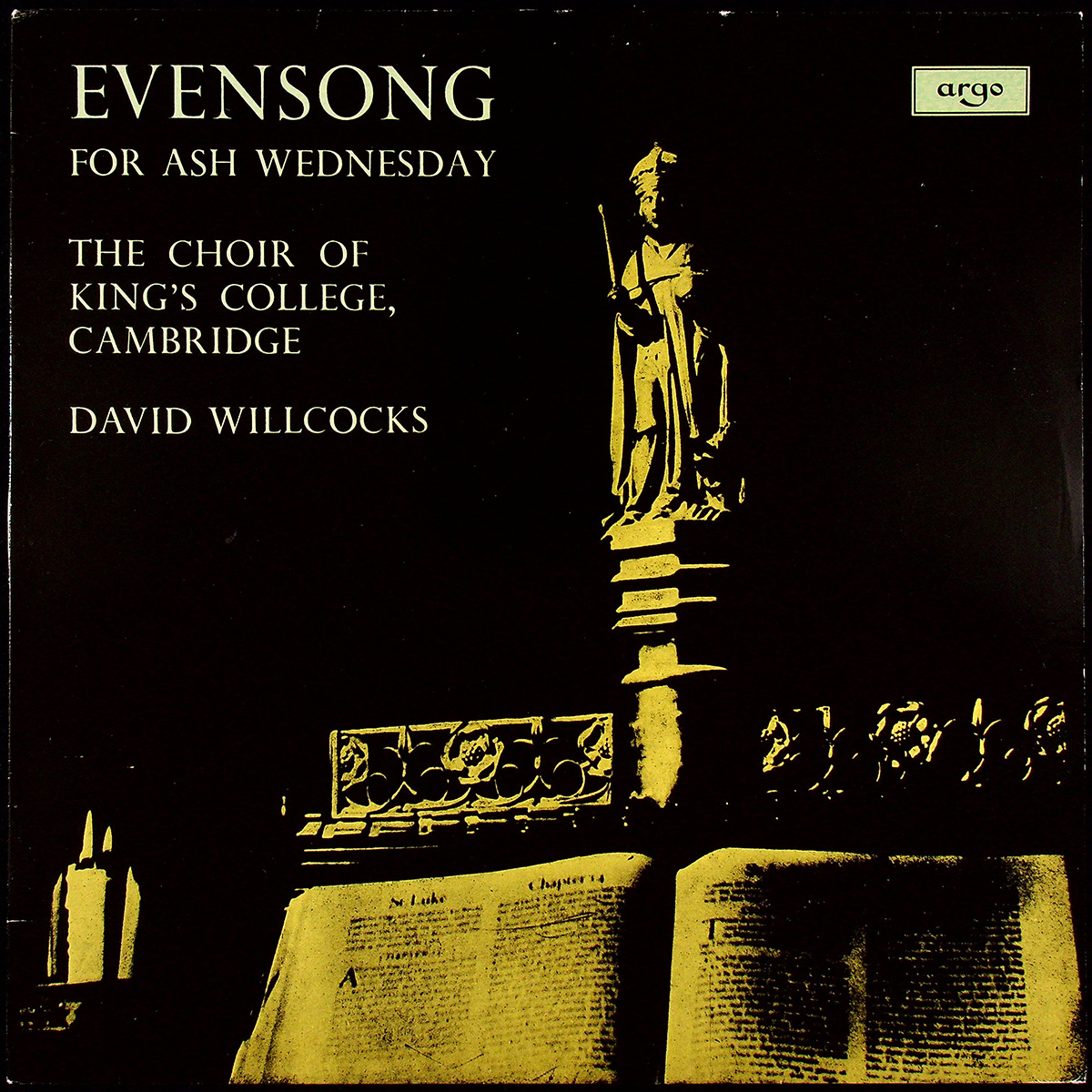
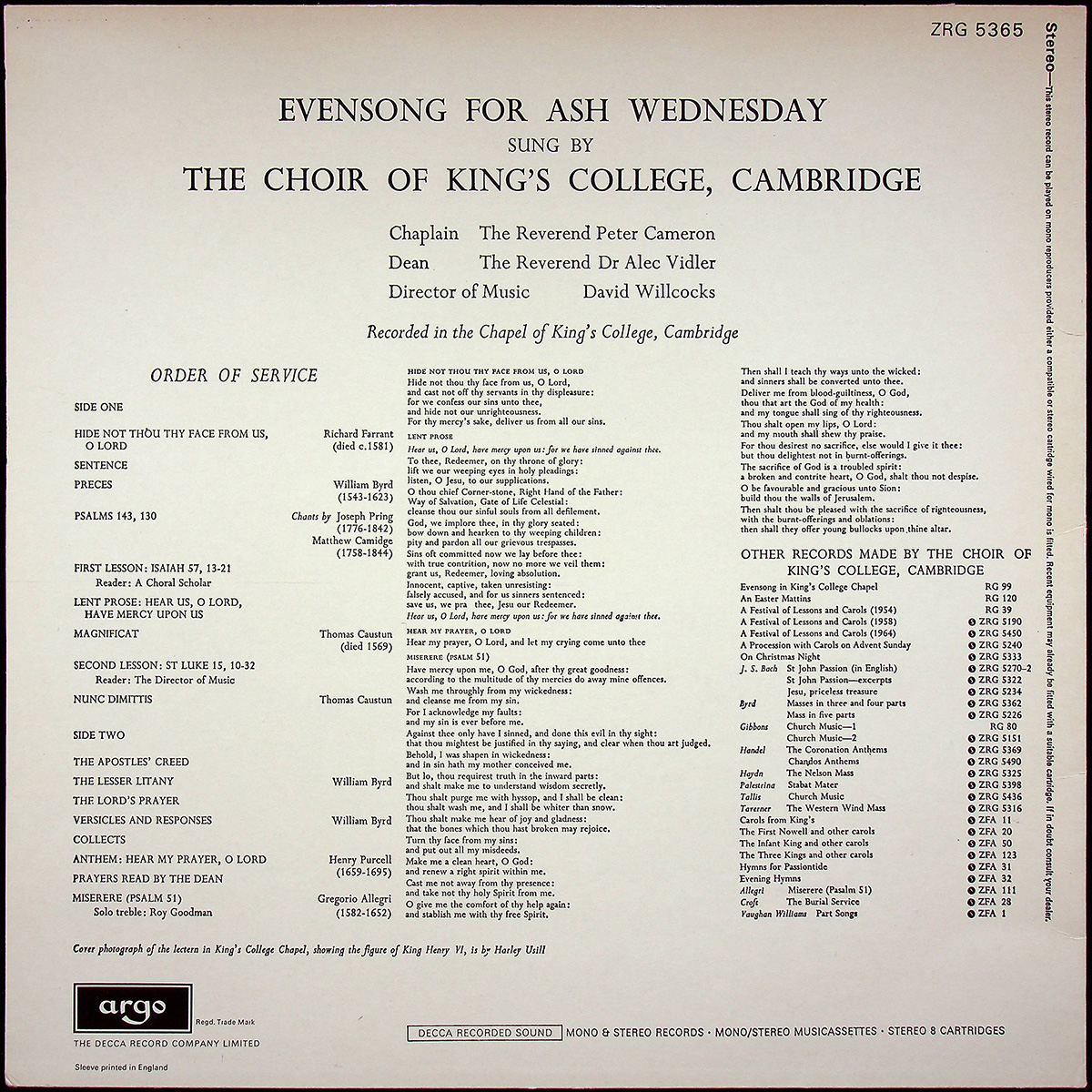
01. First Stereo Pressing: Label – “grooved oval” type where the Argo logo is in reverse inside a silvered oval shape on the label with a deep, sharply defined groove inside the circular perimeter of the label. Text underneath the logo “REGD. ARGO RECORD CO. LTD.” “RECORDING FIRST PUBLISHED 1964” and attribution to David Willcocks / OUP on Side 1, David Willcocks only on Side 2. Matrix codes in runout: ZRG-2519-1G (Side 1) / ZRG-2520-1G (Side 2). Matrix code ending 1G – indicates mastering by Ted Burkett. K/T to left of spindle hole near groove indicates production after July 1st 1963. Cover – “ZRG 5365 stereo” top right on rear cover – “flipback” construction (with two “flaps” visible on the rear) and the text “Laminated with “Clarifoil” made by British Celanese Limited” printed on the flap in the bottom left corner. No Argo logo on the rear cover.
02. Second Stereo Variant: Label – “grooved oval” as first pressing except ® symbol follows “REGD.”, “Recording First Published 1964” missing, no ‘N’ on label, addition of ℗ 1964 at bottom of label replacing text on first pressing. No tax code on label, but “JT” in runout indicating production after November 23rd 1968. Matrix codes in runout: ZRG-2519-1G (Side 1) / ZRG-2520-1G (Side 2). Cover – “ZRG 5365 stereo” top right on rear – “Laminated with ‘Clarifoil’ made by British Celanese Limited” not present on the rear cover.
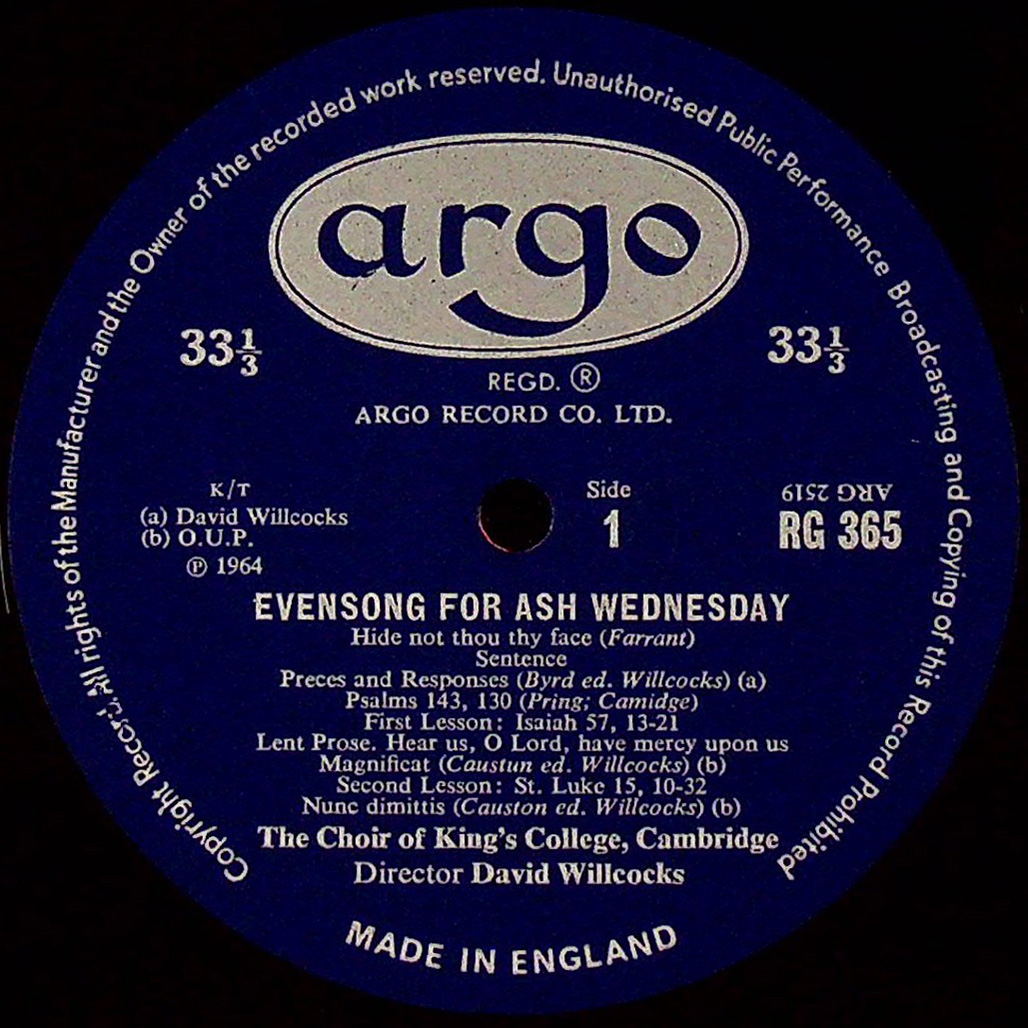
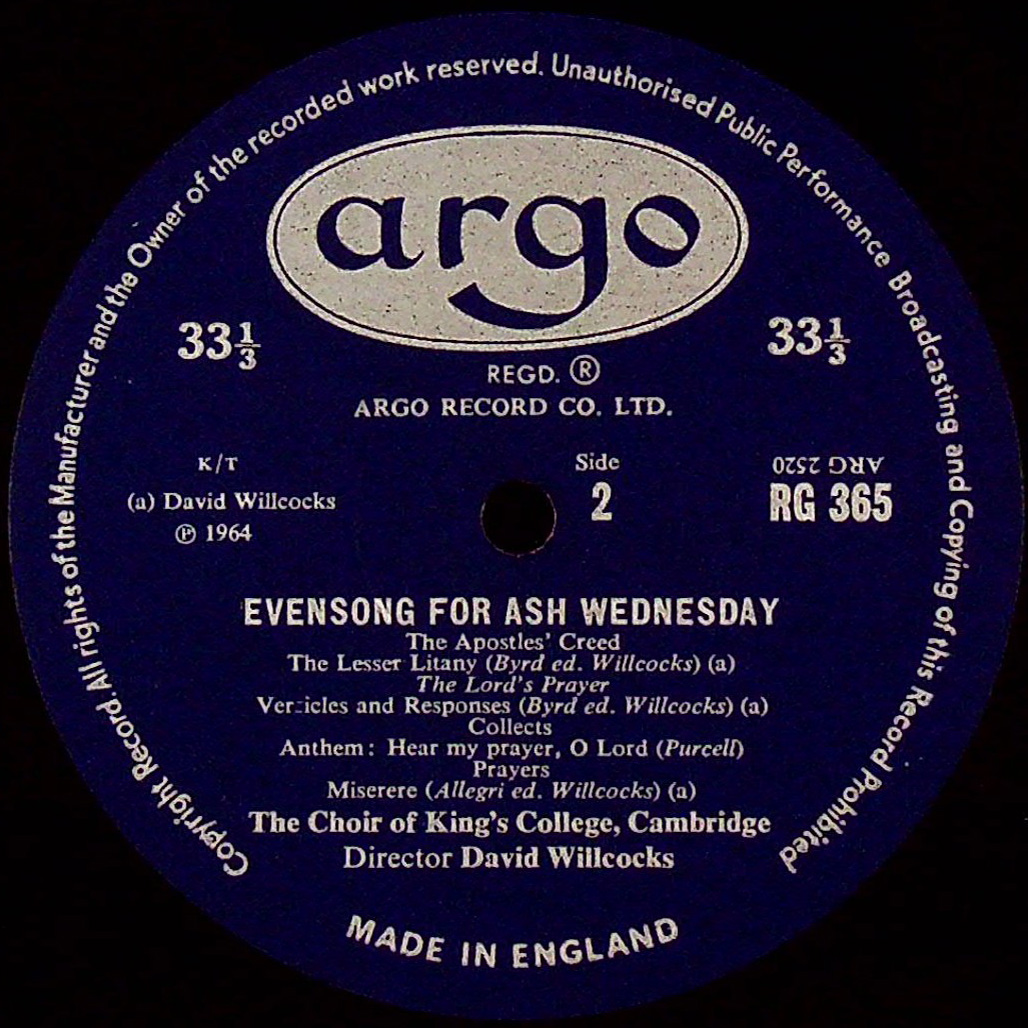
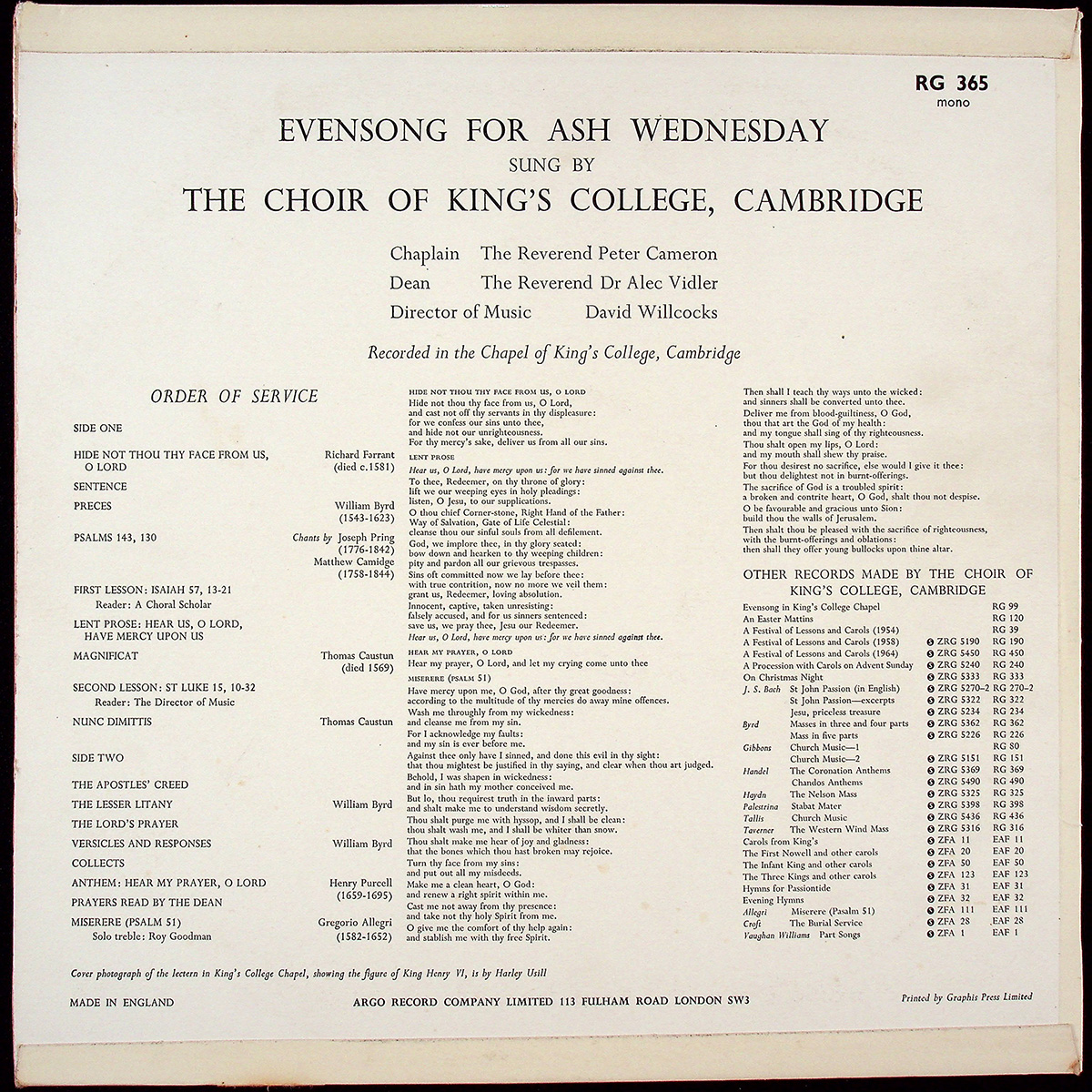
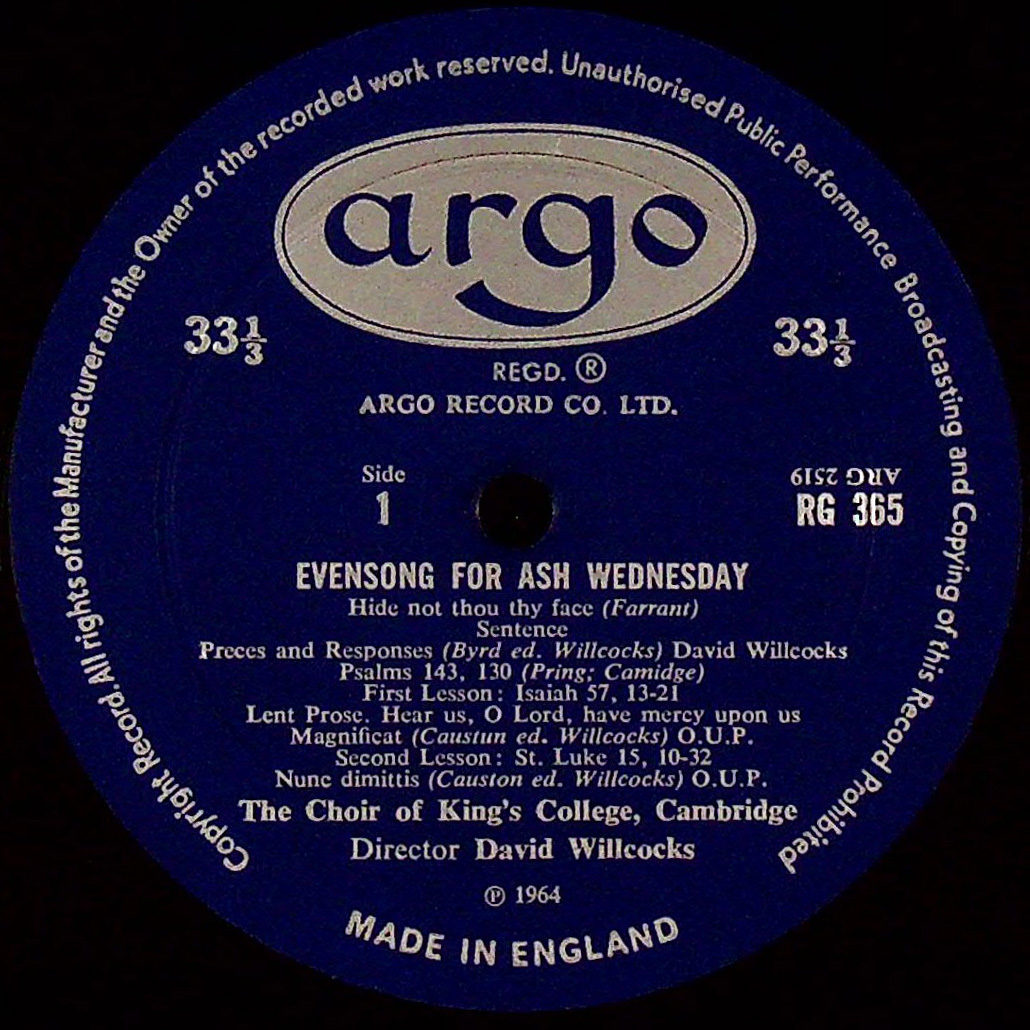
03. First Mono Pressing: Label – “grooved oval” as second pressing with ® symbol – the mono release follows the same pattern. Label is purple/deep blue instead of green. K/T to left of spindle hole near groove indicates production after July 1st 1963. ℗ 1964 to left of spindle hole. Matrix codes in runout: ARG-2519-4A (Side 1) / ARG-2520-1K (Side 2). Matrix code ending 4A – indicates mastering by Guy Fletcher (tbc); matrix code ending 1K – indicates mastering by Tony Hawkins (tbc). Cover – “RG 365 mono” top right on rear – “flipback” construction (with two “flaps” visible on the rear) and the text “Laminated with “Clarifoil” made by British Celanese Limited” printed on the flap in the bottom left corner. No Argo logo on the rear cover.
04. Later Mono Variant: Label – “grooved oval” as second pressing with ® symbol – the mono release follows the same pattern. Label is purple/deep blue instead of green. No tax code present. ℗ 1964 now at bottom of label above “MADE IN ENGLAND”. Matrix codes in runout: ARG-2519-4A (Side 1) / ARG-2520-1K (Side 2). Matrix code ending 4A – indicates mastering by Guy Fletcher (tbc); matrix code ending 1K – indicates mastering by Tony Hawkins (tbc). Cover – “RG 365 mono” top right on rear. “Laminated with ‘Clarifoil’ made by British Celanese Limited” not present on the rear cover. Cover matches second stereo press with the exception of the different catalogue number.
“Argo” Rectangular Label – Made in England
05. Third Stereo Pressing: Label – rectangular boxed Argo logo with REGD. bottom right corner. Matrix codes in runout: ZRG-2519-2G (Side 1) / ZRG-2520-2G (Side 2). Cover – no Argo logo present on rear cover – cover matches second stereo pressing.
06. Fourth Stereo Variant: Label – rectangular boxed Argo logo with REGD. bottom right corner. A subsequent minor variant adds “33 ⅓ rpm” to the right of the Argo logo. Matrix codes in runout: ZRG-2519-2G (Side 1) / ZRG-2520-2G (Side 2). Cover – rectangular boxed Argo logo present bottom centre on rear, now includes “DECCA RECORDED SOUND” in rectangular outline, followed by “MONO & STEREO RECORDS • MONO/STEREO MUSICASSETTES • STEREO 8 CARTRIDGES”. Also includes “Laminated with “Clarifoil” made by British Celanese Limited” however now in sans-serif font. Printed down the right hand edge of the cover: “Stereo – this stereo record can be played on mono reproducers provider either a compatible or stereo cartridge wired for mono is fitted. Recent equipment may already be fitted with a suitable cartridge. If in doubt consult your dealer.”
“Argo” Rectangular Label – Made in Holland
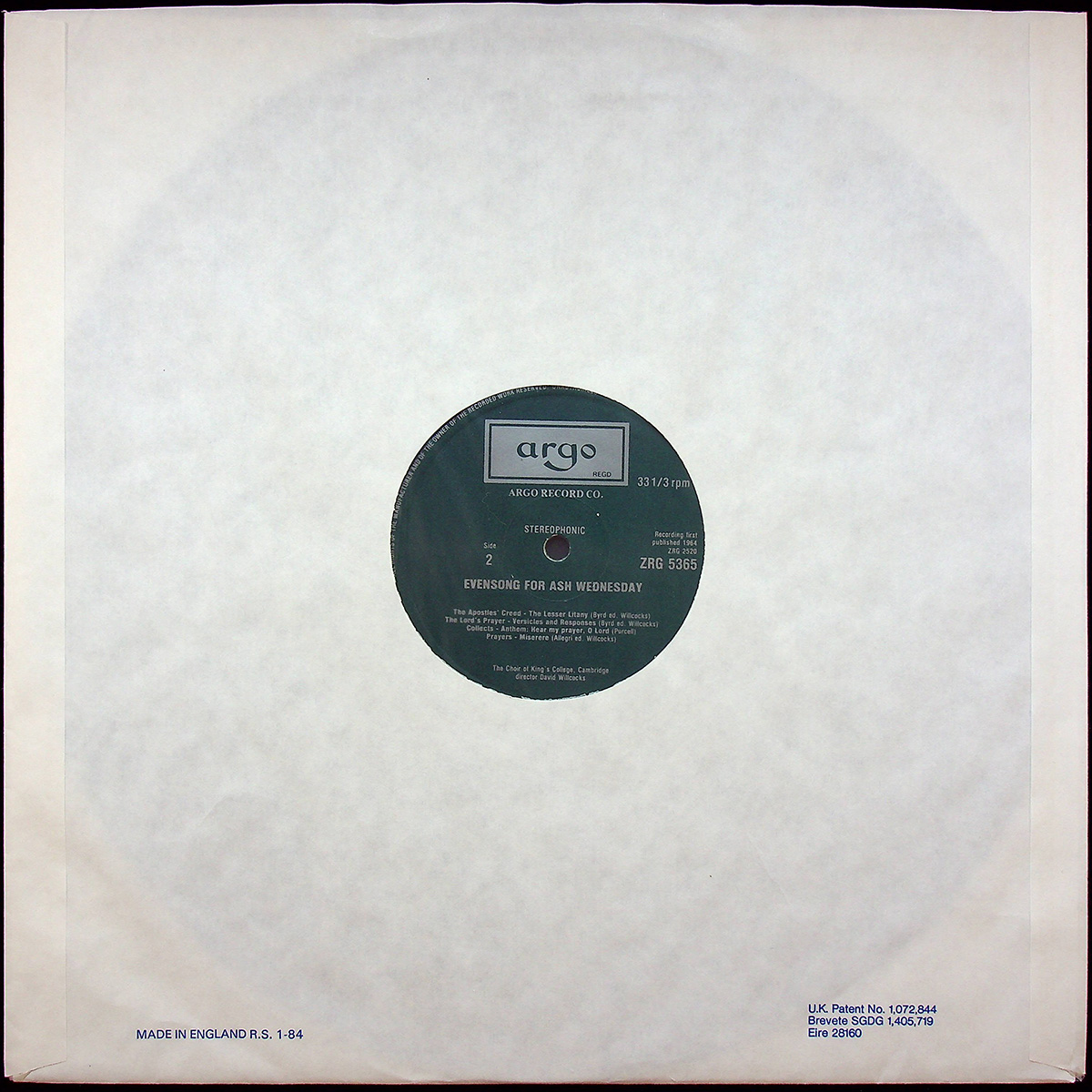
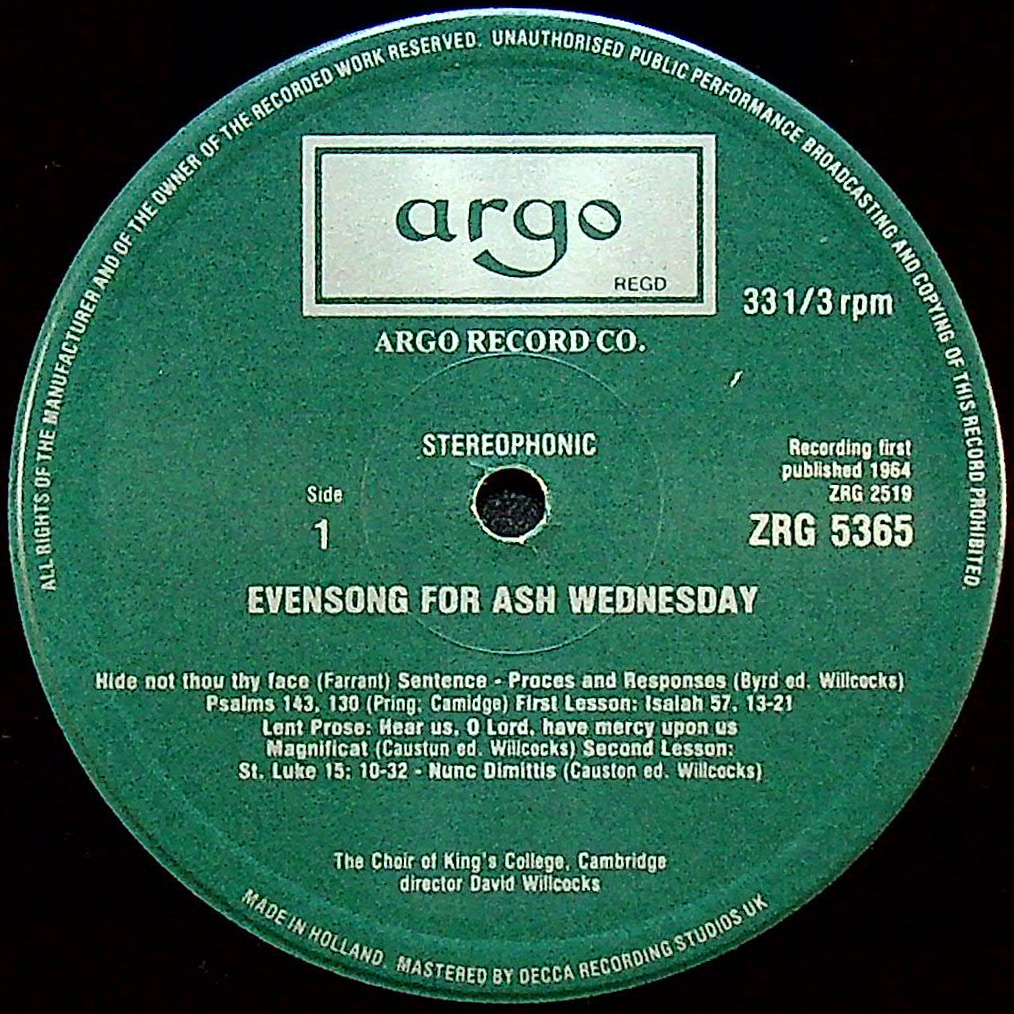
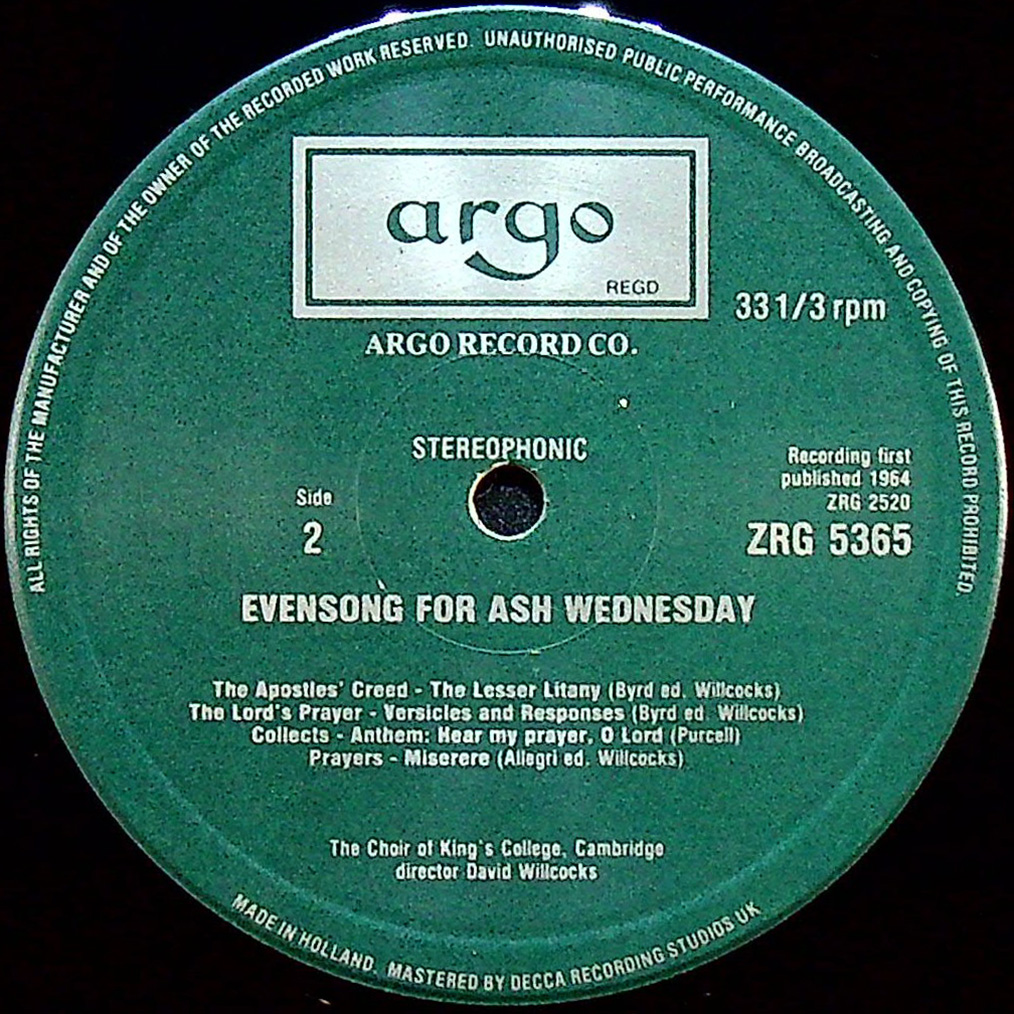
07. Fifth Stereo Pressing: Label – now has “33 1/3 rpm” to left of logo. Overall label is of a simpler layout – “Made in Holland. Mastered by Decca Recording Studios UK” and “Recording first published 1964” (instead of ℗). Matrix codes in runout: ZRG 2519 3X v 420 11 C12 (Side 1) / ZRG 2520 4X v 420 (Side 2). Cover as latest UK pressings with rectangular logo except Argo logo is now bottom left.
Tracklist
Side One
A1 – Hide Not Thou Face From Us, O Lord – Richard Farrant
A2 – Sentence
A3 – Preces – William Byrd
A4 – Psalms 143, 130 – Matthew Camidge
A5 – First Lesson: Isaiah 57,13-21 – Reader: A Choral Scholar
A6 – Lent Prose: Hear Us, O Lord, Have Mercy Upon Us
A7 – Magnificat – Thomas Caustun
A8 – Second Lesson: St. Luke 15, 10-32 – Reader: David Willcocks
A9 – Nunc Dimittis – Thomas Caustun
Side Two
B1 – The Apostles’ Creed
B2 – The Lesser Litany – William Byrd
B3 – The Lord’s Prayer
B4 – Versicles And Responses – William Byrd
B5 – Collects
B6 – Anthem: Hear My Prayer, O Lord – Henry Purcell
B7 – Prayers Read By The Dean – The Reverend Dr. Alec Vidler
B8 – Miserere (Psalm 51) – Gregorio Allegri
This performance of the Miserere has frequently been reissued by Argo/Decca, and by other labels under license. The most significant will be included in the AMD but the many hundreds of compilation albums containing this performance won’t be found here.
Online References
Gramophone Magazine References
Physical Archive Details
Artwork & Liner Notes
Media Samples
The full performance of the Miserere can also be heard as part of the Roy Goodman documentary linked above. Also included above is a link to a partial recording from the BBC Choral Evensong for Ash Wednesday in 1959 – the first BBC Choral Evensong broadcast from King’s under Sir David Willcocks and the first time the choir was recorded singing the “Miserere”. Credit: Archive of Recorded Church Music
Here it is as supplied by Decca for use on YouTube: