
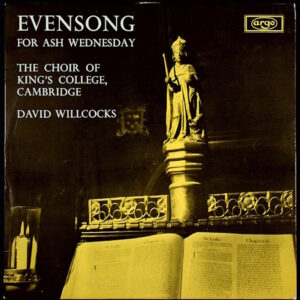
Allegri’s Miserere is an unaccompanied choral setting of Psalm 51: Miserere mei, Deus (Have mercy on me, O God). It is commonly sung during Evensong on Ash Wednesday at the start of Lent, and during “Tenebrae” services in Holy Week before Easter. It was composed around 1638 for exclusive use in the Sistine Chapel, where performances of the Miserere were characterised by the introduction of elaborate ornamentation or “abbellimenti”, especially in the higher voice parts, that were improvised or remembered and never written down in a score. One myth surrounding the work is that it was prohibited, on pain of excommunication, to copy the music and remove it from the Vatican. Another is that Mozart transcribed the work from memory at the age of 14 after hearing it for the first time, and instead of being excommunicated, was later praised by the Pope for his musical achievements.
Many who appreciate choral music will be familiar with Allegri’s Miserere, and even if your tastes lie elsewhere, you may recognise the music when you hear it. What makes this music unique is the difference between what we typically hear today, and what was originally written by Allegri and performed in the Sistine Chapel. The Miserere in its modern form became popular after Sir Ivor Atkins published an edition of the music in 1951, and it was subsequently recorded in 1963 by the Choir of King’s College, Cambridge and released on the Argo label in 1964 as part of an album called Evensong for Ash Wednesday. Later the same recording was included on the compilation album World of King’s which helped to secure its popularity. miserere.org refers to this version as the “traditional” Miserere, because it is how the piece is commonly performed today, with either the original Latin or an English translation of the words taken from the 1662 Book of Common Prayer (as used by Atkins).
In 1771 Charles Burney published a version of the Miserere in London and this score became the basis for a variety of early modern performing editions and subsequent recordings that do not feature any ornamentation. A performing edition with the “high C” was first published by Robert Hass in 1932, based on an example given by W. S. Rockstro in his article on the Miserere in the first edition of Grove’s Dictionary of Music and Musicians published in 1887. This formed the basis for Sir Ivor Atkin’s later edition which set the “high C” in stone. Rockstro made errors constructing his example of the Miserere, which then became the foundation of the version we hear today.
Ironically, despite the famous “high C” that has been so long associated with the Miserere, the first recorded performances of the Miserere were sung by male voices only, using an arrangement by Archibald T. Davison produced for the Harvard Glee Club.
Learn more about Psalm 51 and Gregorio Allegri on the following pages…
Psalm 51 : “Miserere mei, Deus”
A more detailed look at Psalm 51 and its place in Catholic and Anglican liturgy, including the Latin text and English translation from the 1662 Book of Common Prayer, used by Ivor Atkins in his edition of the Miserere published in 1951.
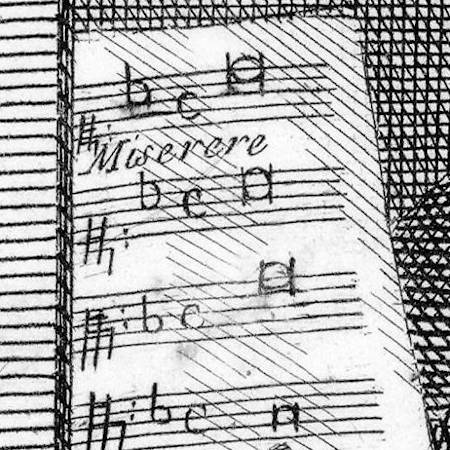
Allegri’s Miserere : The Music
A primer explaining the origins and evolution of Allegri’s music for the Miserere, how it was performed in the Sistine Chapel, and how it was transformed into the unique and instantly recognisable work we are most familiar with today.
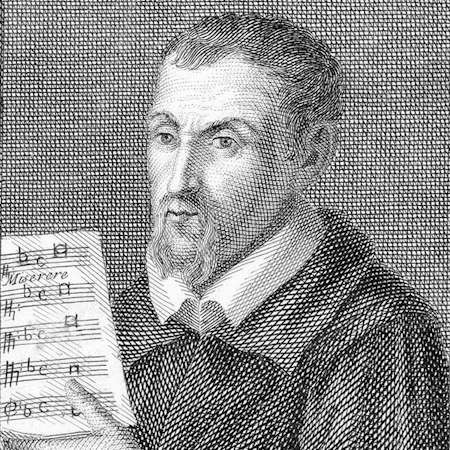
Gregorio Allegri : A Brief Biography
A brief biography of Gregorio Allegri, drawing on a variety of sources to introduce the benevolent priest, “indifferent singer” and “complete master of harmony” who is remembered only for his Miserere and the myths and legends that surround it.

Gregorio Allegri : Other Works
Allegri composed masses and motets in the a cappella style of the Roman school, and a number of more modern concertini for accompanied voices. Find out more about Allegri’s other works, and the published recordings that feature them.