
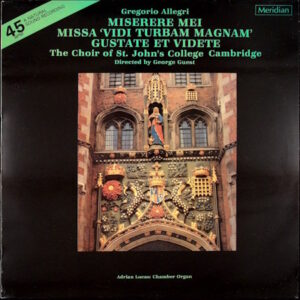
Choir Information
Performance Information
Recording Information
Meridian Natural Sound Recordings (from the album cover)
A Meridian 45 rpm Natural Sound Recording. Whilst Digital and Direct Cut recording can, if properly and carefully used, improve the sound at the studio, records made in these ways but replayed on conventional equipment at 33 1/3 rpm can only give a marginal improvement in the home. Records cut and played at 45 rpm do, however, give a marked improvement in sound quality when it matters in the listener’s room. The higher cutting and playing speed gives much more ‘head room’ and makes it possible to issue records with a wider dynamic range, wider frequency response, and less distortion than is possible with the 33 1/3 rpm playing speed. With a 45 rpm record it is possible to enjoy this greatly improved sound without changing anything in the replay speed, and so greatly improved reproduction can be enjoyed in the home now, and without any modification to the average replay system. Many Direct Cut and Digital records sound ‘better’ in the home because much more care is taken over the production of these records than is often the case with ‘ordinary’ records. All Meridian records are produced with the same care for sound quality as the very best available, and this coupled with the 45 rpm playing speed gives a new and higher level of sound quality.
Release Information
Tracklist
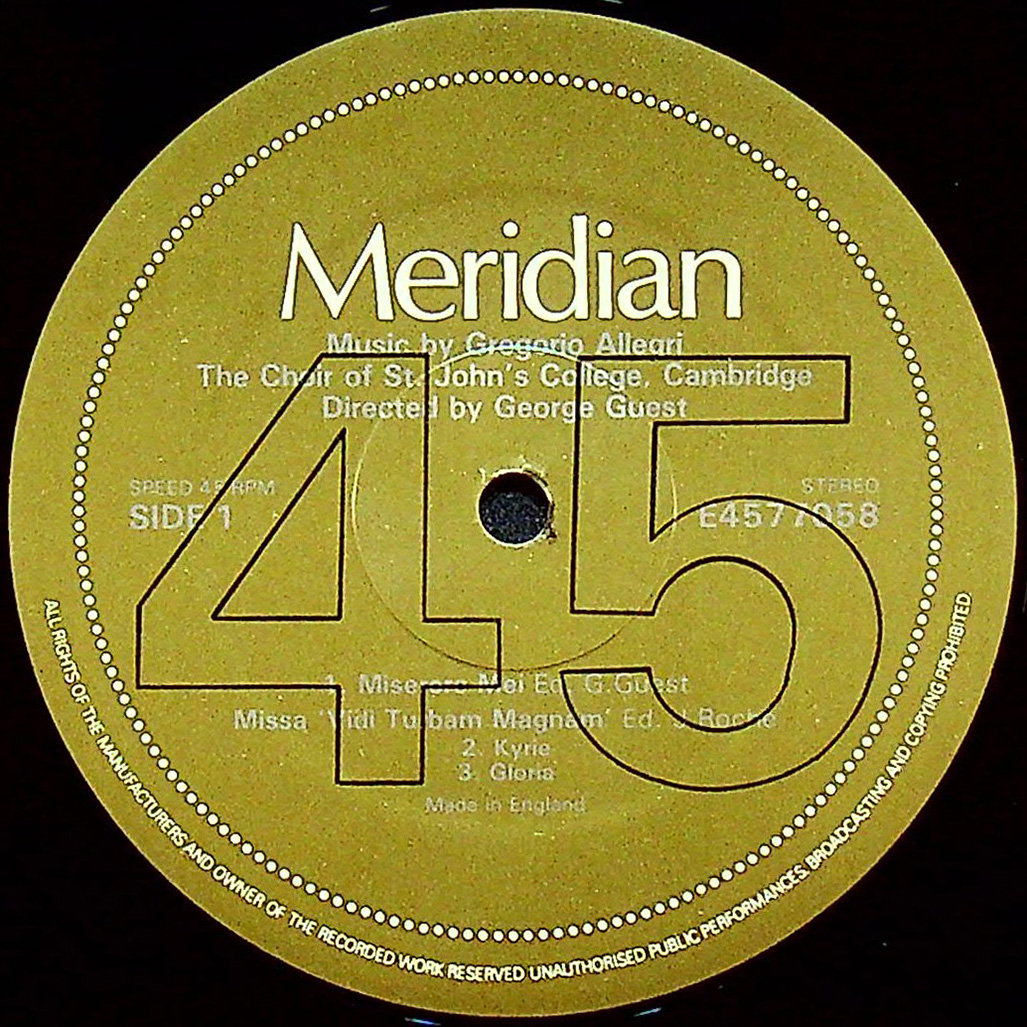
A1 – Miserere Mei, Ed. G. H. Guest
A2 – Missa Vidi Turbam Magnam, Ed. J. Roche – Kyrie
A2 – Gloria
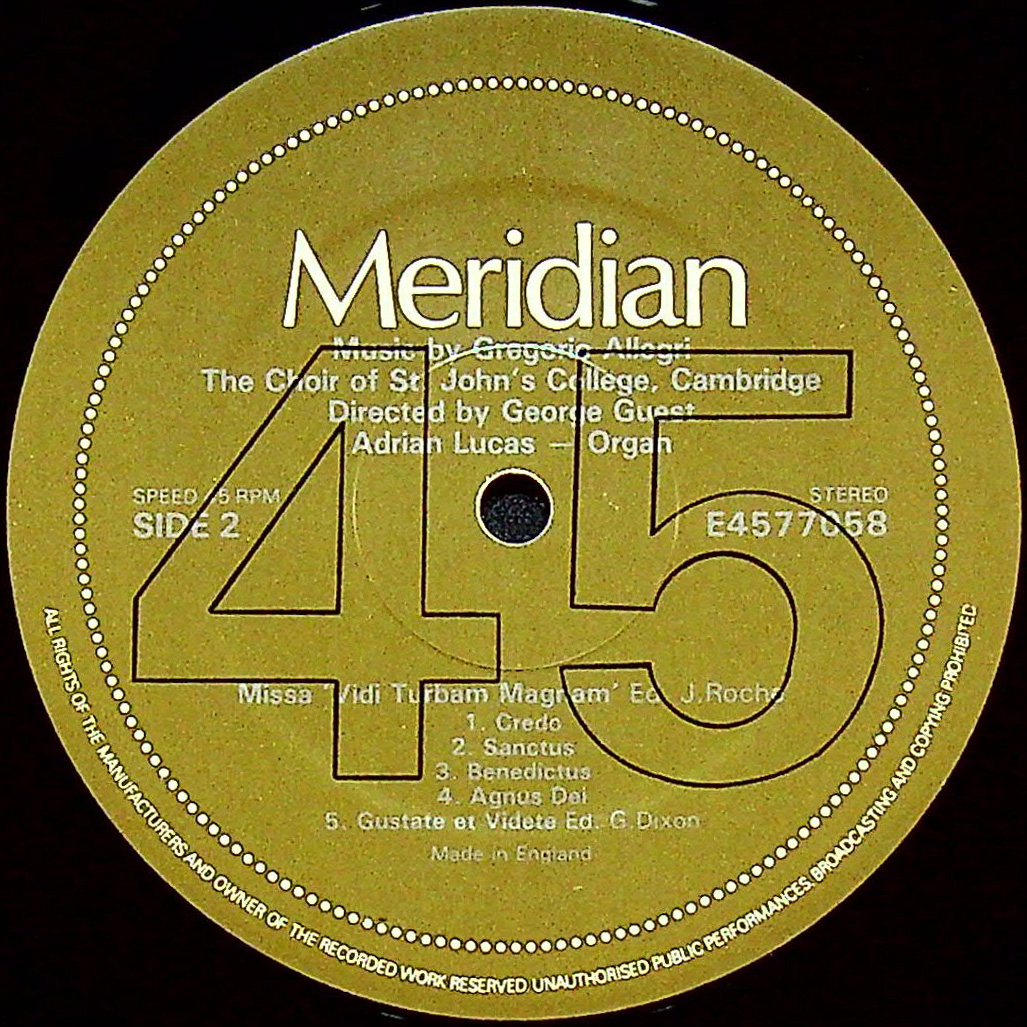
B1 – Credo
B2 – Sanctus
B3 – Agnus Dei
B4 – Gustate et Videte, Ed. G. Dixon
Some controversy over the release date. Most sources say 1981 (appears to be when recorded). Choir web page discography says Jan 1982, with other sources suggesting later, e.g. Gramophone review not until 1983.
Physical Archive Details
Artwork & Liner Notes

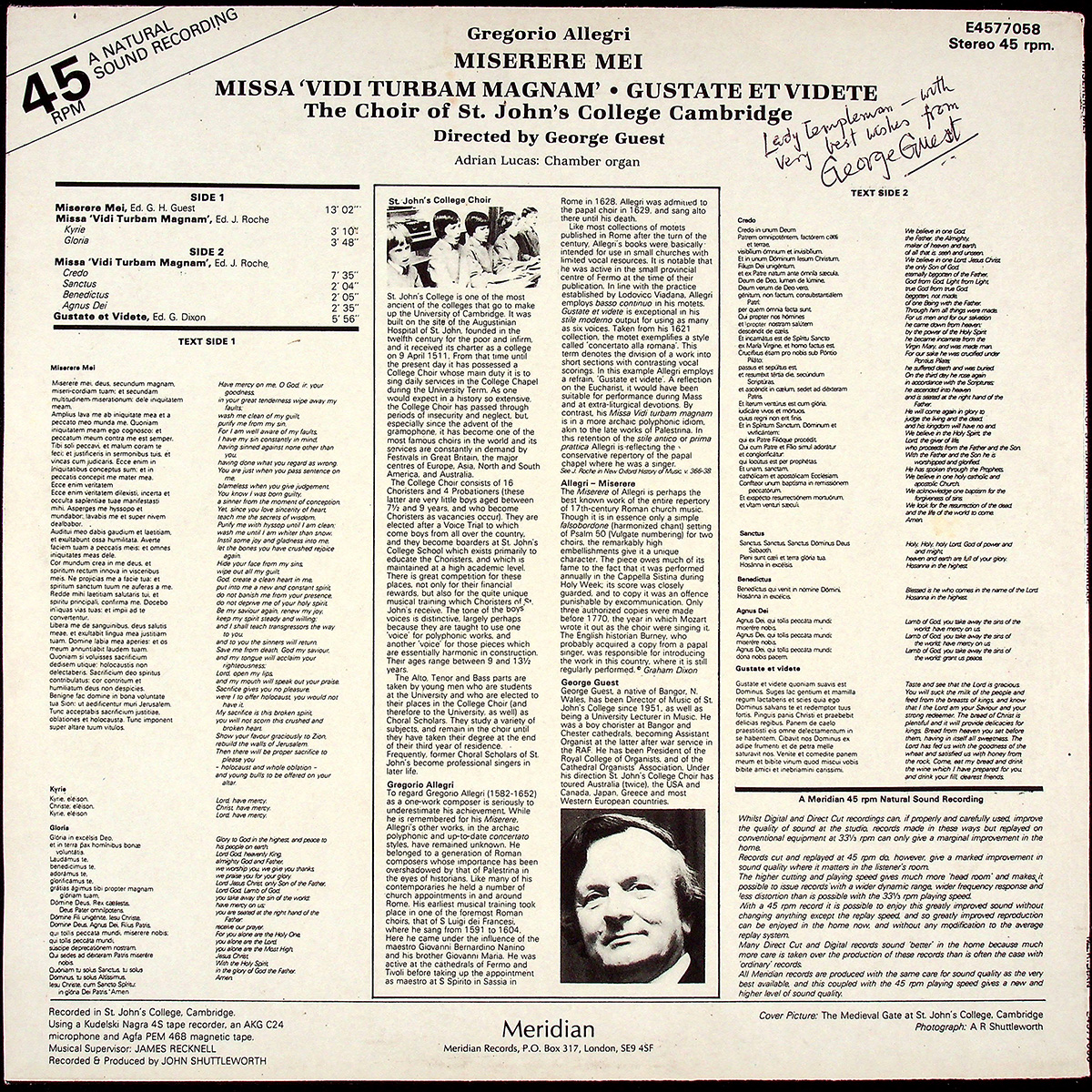
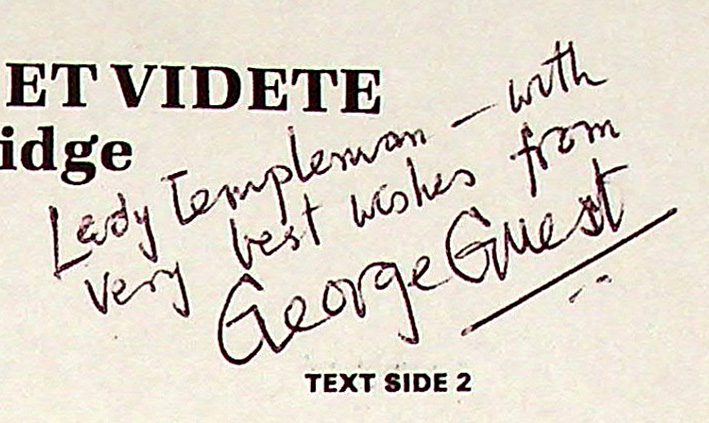
Rear cover autographed: “Lady Templeman – with very best wishes from George Guest”.
Media Samples
No media samples available for this recording